 Alice Rose
 Gravy made from a stock cube and cornflour alone tastes exactly like what it is. This recipe builds the gravy directly from the roasting tin, using the browned bits and rendered fat left behind after cooking a chicken, which is where most of the actual flavour comes from.
A proper roux thickens it, rather than a hastily mixed cornflour slurry, giving a glossy, rounded result.
It takes about ten minutes once the chicken comes out of the oven, using a tin you’d otherwise just wash up.
Why Using the Roasting Tin Gives You a Far Better Gravy
Every roast chicken leaves behind a tin full of browned bits and rendered fat, both of which carry an enormous amount of concentrated flavour that’s wasted if the tin is simply washed clean.
Deglazing that tin with stock or wine, scraping up every browned bit, forms the base of a gravy that tastes distinctly of the chicken it came from, rather than generic and flat.
A proper flour-based roux, made from the fat skimmed off the tin, thickens the gravy with a smoother, glossier result than a quick cornflour slurry whisked in at the last minute.
The roux also needs a minute or two of cooking before any liquid is added, which removes the raw, floury taste that undercooked roux-based gravies often have.
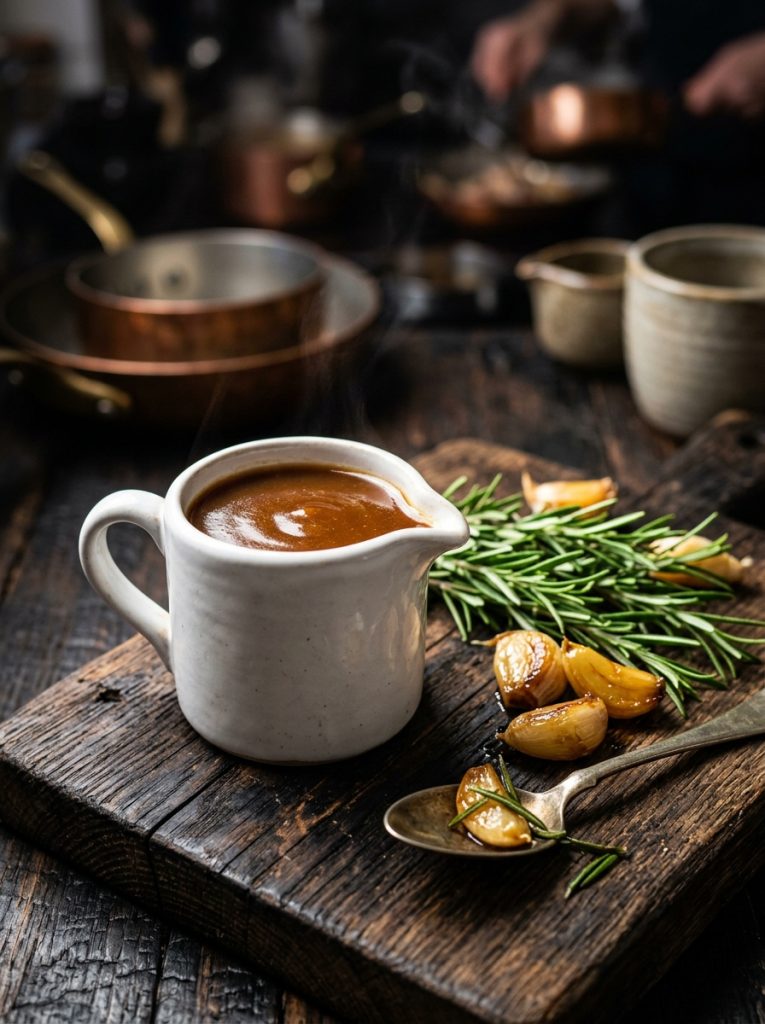
Ingredients for Gordon Ramsay Chicken Gravy
- Roasting tin juices and browned bits from a cooked chicken
- 2 tbsp plain flour
- 500ml chicken stock
- 1 tbsp Worcestershire sauce
- Salt and freshly ground black pepper
How to Make Gordon Ramsay Chicken Gravy — Step by Step
Step 1 — Remove the Chicken
Once the roast chicken is cooked and resting, place the roasting tin on the hob over medium heat.
Step 2 — Skim the Fat
Tilt the tin and spoon off most of the fat, leaving behind about 2 tablespoons along with all the browned juices and bits.
Step 3 — Make the Roux
Sprinkle the flour into the tin and whisk it into the remaining fat, cooking for 1–2 minutes, until it forms a smooth paste and loses its raw, floury smell.
Step 4 — Add the Stock Gradually
Gradually whisk in the stock, a little at a time, scraping up all the browned bits from the base of the tin as you go.
Step 5 — Simmer
Bring to a gentle simmer and cook for 5–6 minutes, whisking occasionally, until thickened and glossy.
Step 6 — Season and Finish
Stir in the Worcestershire sauce. Season with salt and pepper to taste.
Step 7 — Strain and Serve
For a completely smooth gravy, pass through a fine sieve into a warmed jug before serving.
My Top Tips for the Best Gordon Ramsay Chicken Gravy
Don’t wash the roasting tin before making the gravy, as those browned bits carry most of the flavour that makes this gravy worth the extra step.
Cook the roux for a full minute or two before adding any liquid, as this removes the raw, floury taste that undercooked gravy can have.
Add the stock gradually, whisking constantly, to avoid lumps forming as the gravy thickens.
Strain the finished gravy through a sieve for a completely smooth result, particularly useful if any small bits of browned skin ended up in the mixture.
Taste before adding extra salt, as stock and Worcestershire sauce both carry a fair amount of salt already.
Serving Suggestions
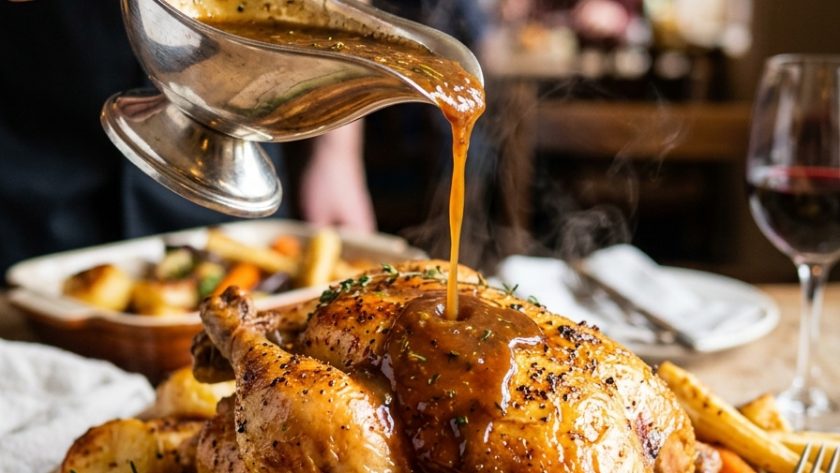
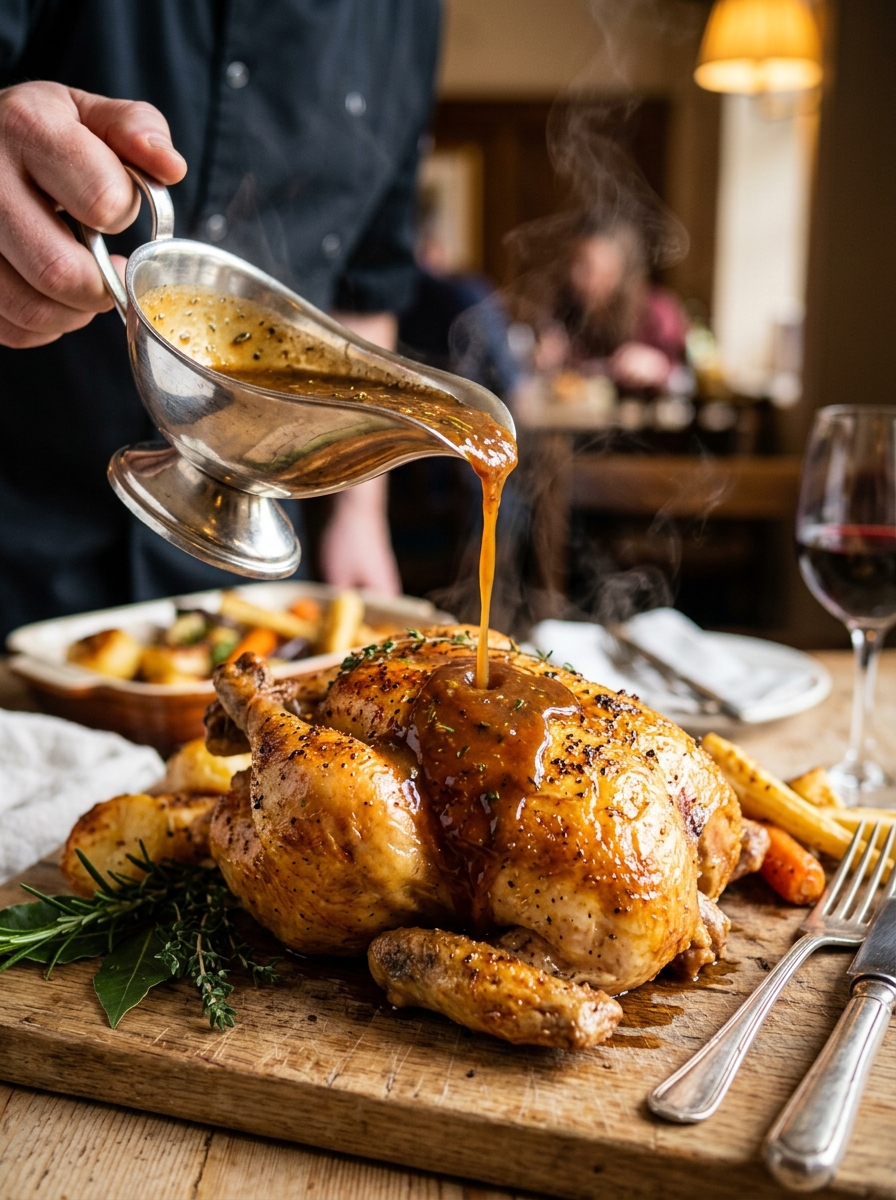
Serve over a full roast dinner, poured generously over the chicken, roast potatoes and vegetables. It also works well with sausages and mash.
How to Store Gordon Ramsay Chicken Gravy
In the fridge: Store in an airtight container in the fridge for up to 3 days. Reheat gently, whisking in a splash of stock if it’s thickened too much on standing.
In the freezer: Freezes well for up to 3 months. Defrost fully in the fridge and reheat gently, whisking to restore the smooth texture.
Gordon Ramsay Chicken Gravy Recipe
Ingredients
Method
- Place roasting tin on the hob over medium heat.
- Skim off excess fat, leaving 2 tbsp with the browned bits.
- Whisk in flour, cook 1–2 minutes.
- Gradually whisk in stock, scraping up browned bits.
- Simmer 5–6 minutes until thickened.
- Stir in Worcestershire sauce, season.
- Strain into a warmed jug, serve.
Notes
Frequently Asked Questions About Gordon Ramsay Chicken Gravy
Can I make gravy without a roasting tin’s juices?
Yes — melt butter in a saucepan and follow the same roux method, using good-quality stock in place of the tin juices, though the flavour won’t be quite as deep.
Why is my gravy lumpy?
This usually happens when the stock is added too quickly. Add it gradually, whisking constantly, especially in the first stages when the roux is still thick.
Why is my gravy too thin?
This means it needs longer on the simmer, or slightly more roux. Continue cooking gently, whisking occasionally, until it coats the back of a spoon.
Can I make gravy ahead of a roast dinner?
A base can be made ahead using stock alone, then finished with the pan juices once the chicken comes out of the oven for the best flavour.