 Alice Rose
 This Gordon Ramsay basil pesto recipe avoids the two things that ruin most homemade versions: bitter, over-blitzed basil and a paste so thick it clumps rather than coats.
Toasting the pine nuts first adds a depth that raw ones simply don’t have, and pulsing rather than continuously blending keeps the basil from turning dark and bitter through overheating in the blade.
Good olive oil matters here more than almost anywhere else, since there’s nowhere for a poor one to hide.
Why This Gordon Ramsay Basil Pesto Recipe Works
Basil bruises and darkens quickly once it’s blitzed continuously, partly from oxidation and partly from the heat generated by the blade.
Pulsing the ingredients in short bursts, rather than running the blender continuously, keeps the basil from overheating and turning bitter, and preserves its bright green colour for longer.
Toasting the pine nuts briefly in a dry pan before blending brings out their natural oils and adds a nuttiness that raw pine nuts don’t have — it’s a small step that makes a noticeable difference to the final flavour.
Using good quality extra virgin olive oil is equally important, since the oil makes up a significant proportion of the volume and its flavour comes through directly in the finished pesto.
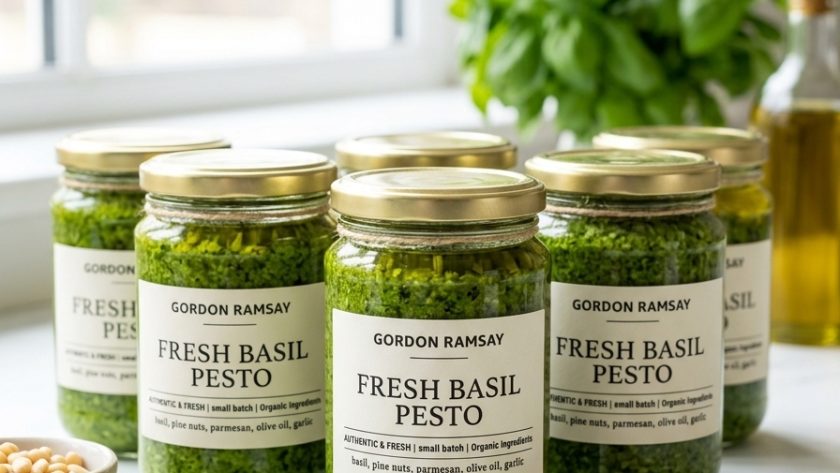
Ingredients for Gordon Ramsay Basil Pesto
- 60g fresh basil leaves, stalks removed
- 40g pine nuts
- 2 garlic cloves
- 50g Parmesan, finely grated
- 150ml extra virgin olive oil
- Salt and freshly ground black pepper
- Squeeze of lemon juice
How to Make Gordon Ramsay Basil Pesto — Step by Step
Step 1 — Toast the Pine Nuts
Toast the pine nuts in a dry frying pan over medium heat for 2–3 minutes, tossing frequently, until lightly golden. Watch closely, as they burn quickly. Tip onto a plate to cool.
Step 2 — Blitz the Base
Add the cooled pine nuts, basil leaves, garlic, and a pinch of salt to a food processor. Pulse in short bursts until roughly chopped.
Step 3 — Add the Oil Gradually
With the processor running on a low pulse, drizzle in the olive oil gradually until the mixture comes together into a loose, coarse paste. Avoid over-processing — some texture should remain.
Step 4 — Stir in the Parmesan
Transfer to a bowl and stir in the Parmesan by hand, rather than blending it in, to avoid the pesto turning gluey.
Step 5 — Season and Finish
Add a squeeze of lemon juice and season with salt and pepper to taste. Stir to combine.
My Top Tips For Perfect Basil Pesto
Pulse, don’t blend continuously. Continuous blending overheats the basil and turns the pesto bitter and dull in colour.
Toast the pine nuts every time. It only takes a couple of minutes and adds a real depth of flavour that raw pine nuts don’t have.
Stir the Parmesan in by hand. Blending cheese into the mixture can make it gluey rather than loose and spoonable.
Use good olive oil. With so few ingredients, the quality of the oil comes through directly in the finished pesto.
Add a squeeze of lemon juice. It brightens the whole thing and helps keep the basil’s colour vivid for longer.
Serving Suggestions
Toss through hot pasta with a splash of the pasta cooking water to loosen it, spread onto toasted sourdough with fresh tomatoes, or spoon over grilled chicken or fish just before serving.
How to Store
In the fridge: Store in an airtight jar with a thin layer of olive oil poured over the top to seal out air, and keep in the fridge for up to 5 days.
In the freezer: Freezes very well for up to 3 months. Freeze in an ice cube tray for easy, portioned use, then transfer to a freezer bag once solid.
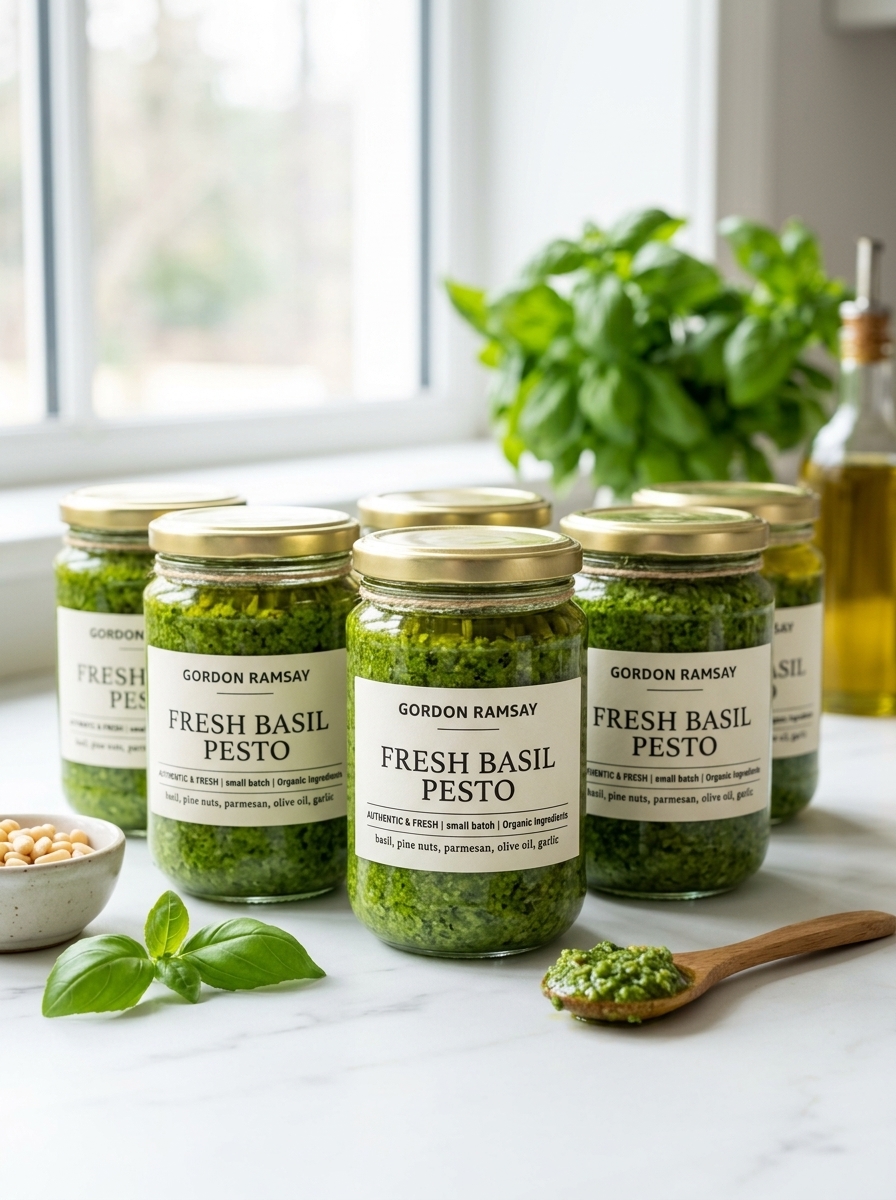
Gordon Ramsay Basil Pesto Recipe
Ingredients
Method
- Toast pine nuts 2–3 minutes until golden. Cool.
- Pulse pine nuts, basil, garlic, and salt in a food processor.
- Drizzle in oil gradually while pulsing until a coarse paste forms.
- Stir in Parmesan by hand.
- Season with lemon juice, salt, and pepper.
Notes
FAQs About This Recipe
Why has my pesto turned brown?
This is usually from oxidation, caused either by over-blitzing or not sealing the surface with oil once stored. Pulse rather than blend, and always cover the surface with a thin layer of oil before refrigerating.
Can I use walnuts instead of pine nuts?
Yes — walnuts make a good substitute and are considerably cheaper, though the flavour will be slightly more bitter and robust than the classic pine nut version.
Can I make this pesto nut-free?
Yes — toasted sunflower or pumpkin seeds work well in place of pine nuts, giving a similar texture with a milder flavour.
Why is my pesto too thick to spoon?
This usually means not enough oil was added, or the Parmesan was blended in rather than stirred through by hand. Loosen with a little extra olive oil if needed.