 Alice Rose
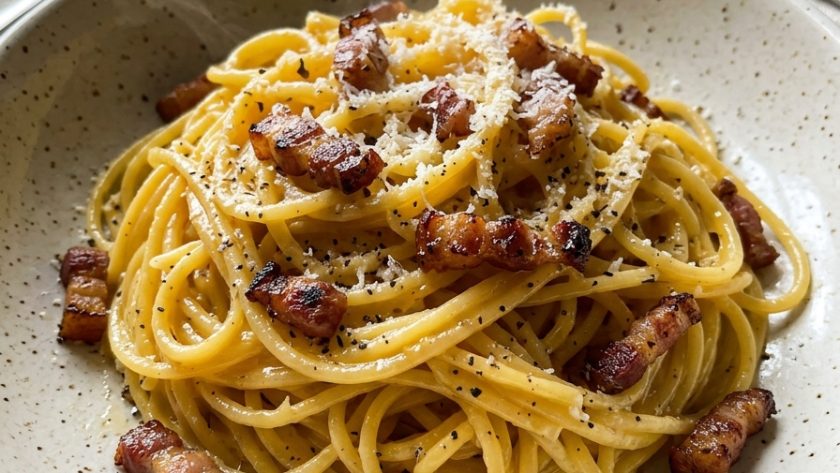
 A proper carbonara contains no cream at all, which surprises a lot of people who’ve only ever eaten the heavy, white-sauced versions common in restaurants and ready meals.
The silky, glossy sauce comes entirely from egg yolks, Pecorino and a splash of starchy pasta water, brought together off the heat so the eggs thicken gently rather than scrambling.
It’s one of the quickest pasta dishes you can make, ready in about twenty minutes, but it relies on timing and temperature control more than almost any other.
Why Mixing the Sauce Off the Heat Stops the Eggs Scrambling
The entire trick of carbonara is cooking the eggs just enough to thicken them into a creamy sauce, without tipping them over into scrambled egg.
Eggs begin to set at around 70°C, which is well below the temperature of a pan fresh off the hob, so tossing the hot pasta with the egg mixture over direct heat almost guarantees a lumpy, scrambled result.
Taking the pan completely off the heat, and letting the residual warmth of the pasta and the starchy cooking water gently cook the egg mixture, gives you far more control.
The starchy pasta water also acts as an emulsifier, helping the egg, cheese and rendered pancetta fat bind together into one glossy, clinging sauce rather than separating.
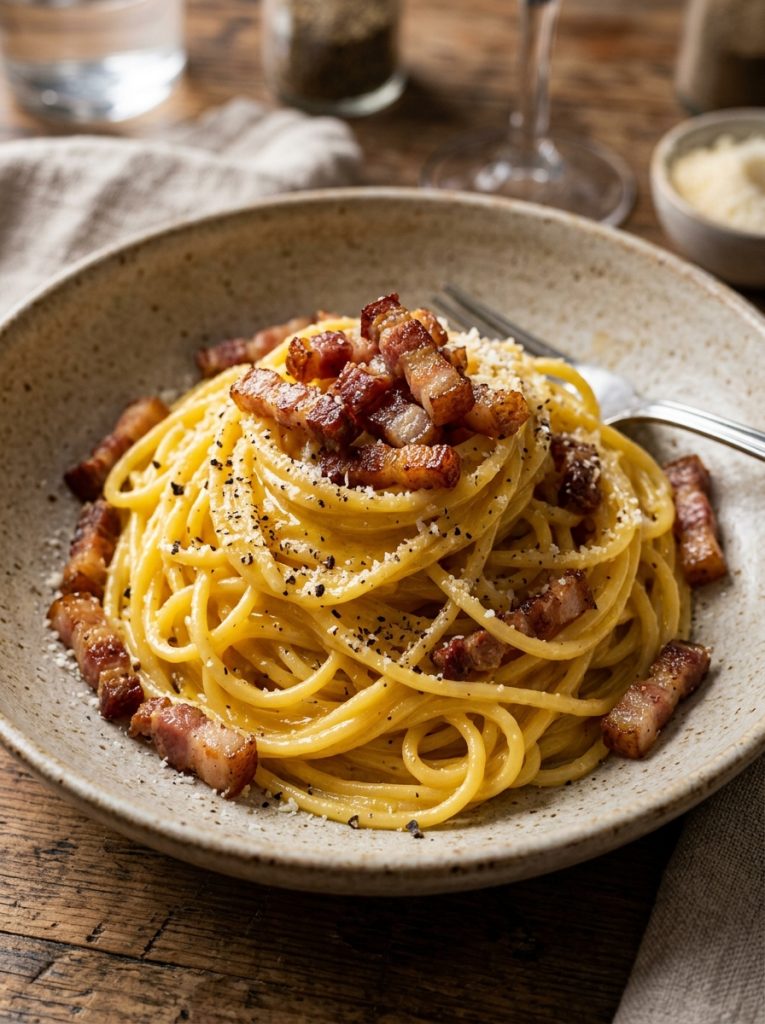
Ingredients for Gordon Ramsay Carbonara
- 400g spaghetti
- 150g pancetta or guanciale, diced
- 4 large egg yolks, plus 1 whole egg
- 60g Pecorino Romano, finely grated, plus extra to serve
- 30g Parmesan, finely grated
- Freshly ground black pepper
- Salt, for the pasta water
How to Make Gordon Ramsay Carbonara — Step by Step
Step 1 — Start the Pasta
Bring a large pot of generously salted water to the boil. Cook the spaghetti according to packet instructions until al dente.
Step 2 — Crisp the Pancetta
While the pasta cooks, add the pancetta to a large, cold frying pan. Cook over medium heat for 6–8 minutes, until the fat has rendered and the pancetta is golden and crisp.
Step 3 — Make the Egg Mixture
In a bowl, whisk together the egg yolks, whole egg, Pecorino and Parmesan. Add a generous amount of black pepper.
Step 4 — Reserve Pasta Water
Before draining the pasta, scoop out a mug of the starchy cooking water and set aside.
Step 5 — Combine Pasta and Pancetta
Drain the pasta and add it to the pan with the pancetta and its fat. Toss to coat. Remove the pan from the heat entirely.
Step 6 — Add the Egg Mixture
Pour the egg mixture over the pasta, tossing vigorously and constantly. Add a splash of pasta water at a time until the sauce is glossy, creamy and coats the pasta.
Step 7 — Serve
Serve immediately with extra Pecorino and plenty of black pepper.
My Top Tips for the Best Gordon Ramsay Carbonara
Take the pan completely off the heat before adding the egg mixture, as this is the single most important step for avoiding scrambled eggs.
Start the pancetta in a cold pan, as this renders the fat slowly and evenly, giving crisp pieces rather than burnt ones.
Use the starchy pasta water gradually, a splash at a time, since it’s what emulsifies the sauce and gives it that silky, glossy finish.
Toss vigorously and constantly once the egg goes in, so the residual heat cooks the egg gently and evenly.
Serve straight away, as carbonara thickens and loses its silky texture quickly once it starts to cool.
Serving Suggestions
Serve immediately with extra grated Pecorino and a generous crack of black pepper. A simple green salad dressed with lemon and olive oil makes a good, light accompaniment.
How to Store Gordon Ramsay Carbonara
In the fridge: Best eaten fresh, as the egg-based sauce doesn’t reheat well. Leftovers can be kept for up to 1 day but the sauce will thicken and may turn slightly scrambled when reheated.
In the freezer: Not recommended, as the egg sauce separates and turns grainy once frozen and thawed.
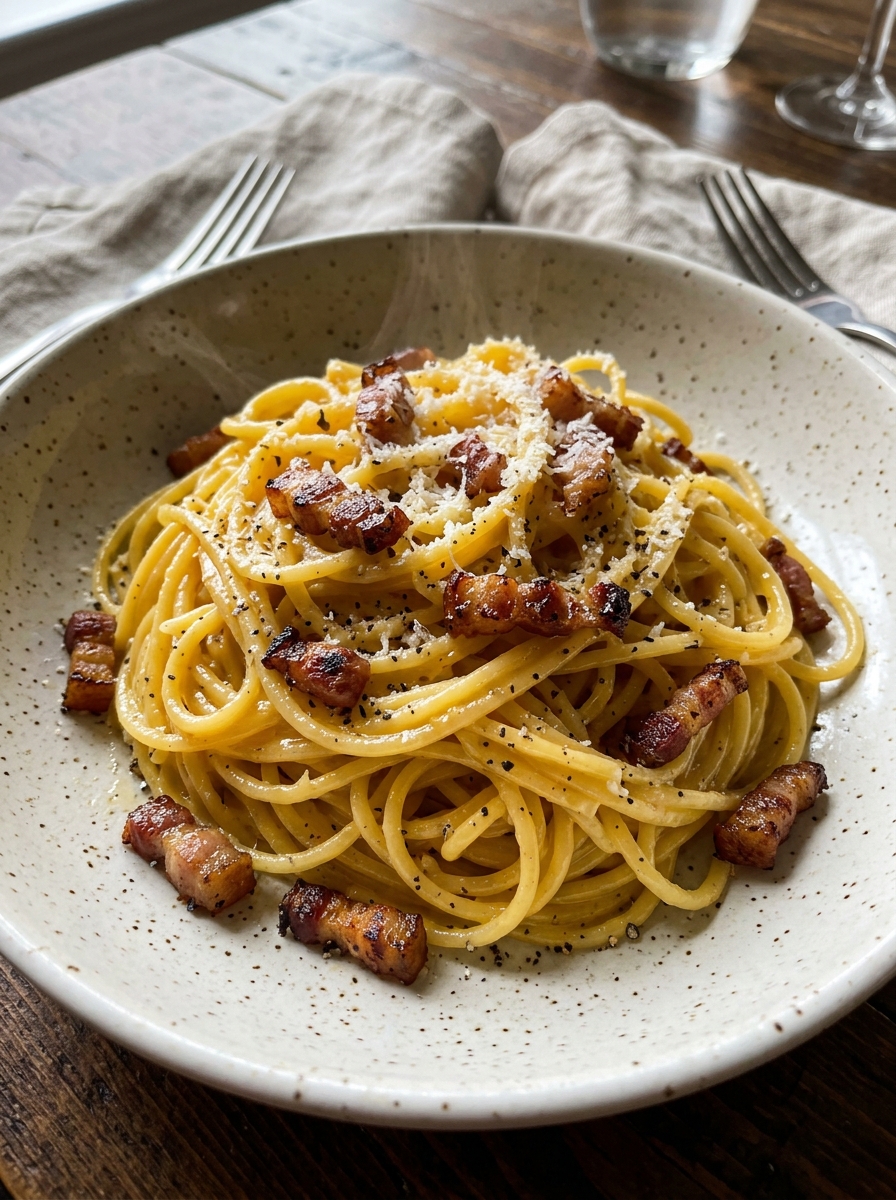
Gordon Ramsay Carbonara Recipe
Ingredients
Method
- Cook spaghetti in salted water until al dente.
- Crisp pancetta in a cold pan over medium heat 6–8 minutes.
- Whisk egg yolks, whole egg, cheeses and pepper.
- Reserve a mug of pasta water, then drain pasta.
- Toss pasta with pancetta, remove pan from heat.
- Pour in egg mixture, toss constantly, loosening with pasta water.
- Serve immediately with extra Pecorino and black pepper.
Notes
Frequently Asked Questions About Gordon Ramsay Carbonara
Does authentic carbonara have cream in it?
No — a traditional carbonara contains no cream at all. The creamy texture comes entirely from the egg yolks, cheese and starchy pasta water.
Why did my carbonara turn into scrambled eggs?
This almost always means the pan was still too hot when the egg mixture went in. Remove the pan from the heat entirely before adding the eggs.
Can I use bacon instead of pancetta or guanciale?
Yes — smoked streaky bacon works as a substitute, though pancetta or guanciale gives a more traditional, slightly less smoky flavour.
Can I make this dish ahead of time?
It’s best made and eaten immediately, as the egg-based sauce doesn’t hold or reheat well. The pancetta can be crisped ahead if needed.