 Alice Rose
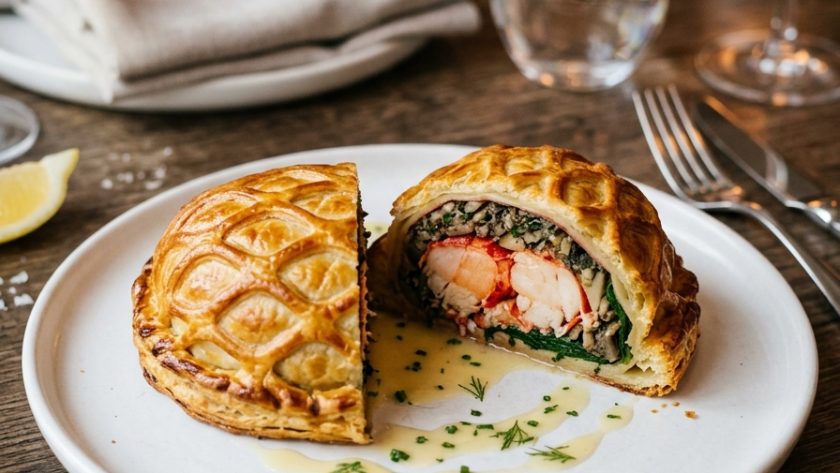
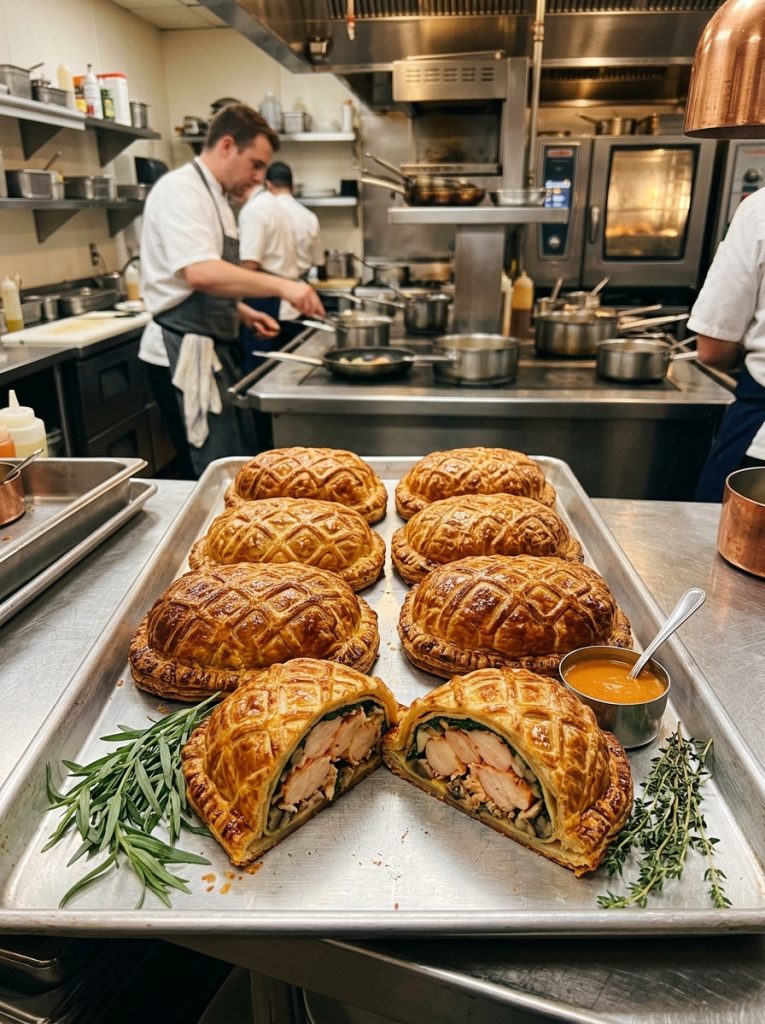
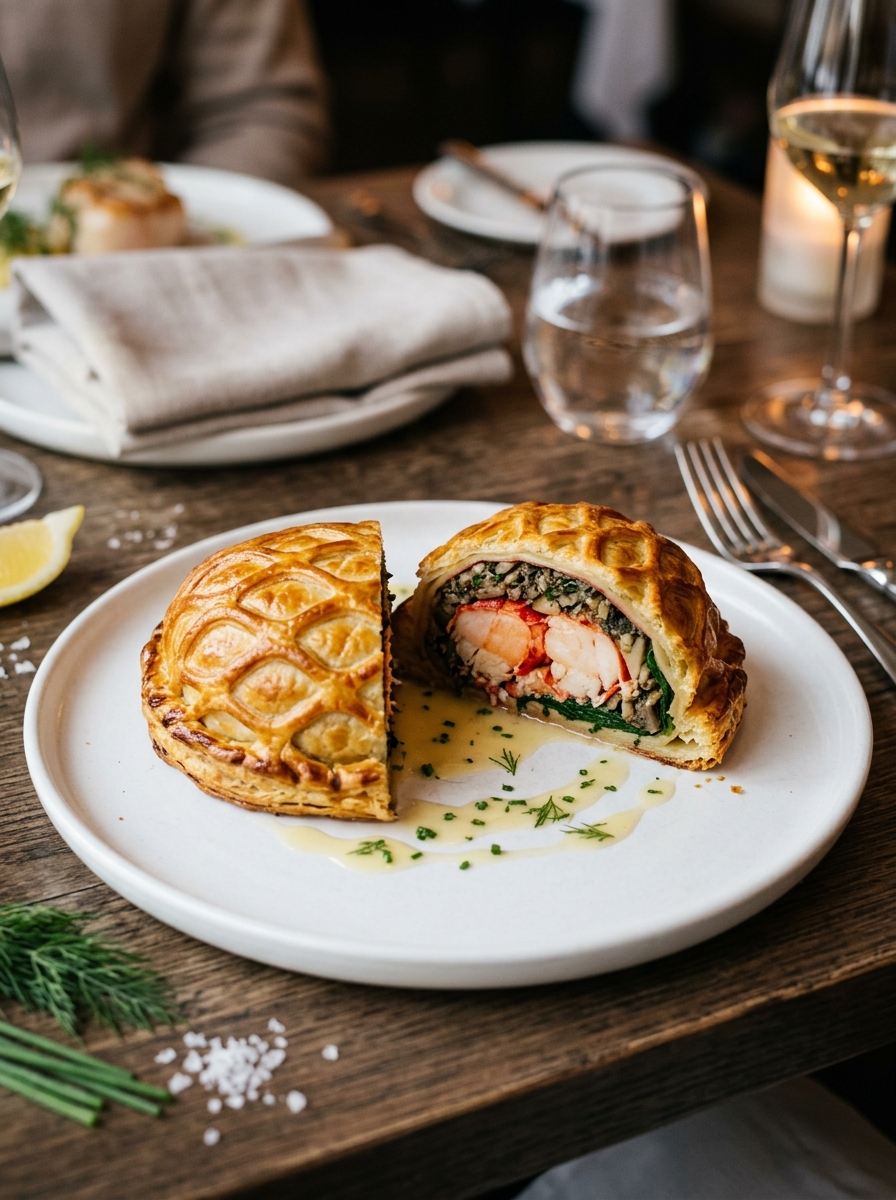
 This Gordon Ramsay lobster Wellington recipe applies the same technique as a classic beef Wellington to lobster tail: a layer of intensely reduced mushroom duxelles wrapped around the protein, sealed inside puff pastry, and baked until the pastry is crisp and the lobster is just cooked through.
The duxelles does double duty — it adds flavour, and it creates a barrier that keeps the pastry from turning soggy against the lobster.
Getting this right depends on two things: cooking the lobster very briefly before it goes into the pastry, and reducing the duxelles until it’s completely dry.
Why This Gordon Ramsay Lobster Wellington Recipe Works
Lobster meat cooks very quickly and turns rubbery well before puff pastry has finished baking through, so the lobster is only partially poached beforehand — just enough to firm it up slightly — and finishes cooking gently inside the pastry during the final bake.
The mushroom duxelles needs to be cooked down until every trace of moisture has evaporated, which can take longer than people expect.
A wet duxelles releases liquid during baking that soaks straight through the pastry from the inside, which is the most common reason a Wellington of any kind turns soggy on the bottom.
Chilling the wrapped Wellington before baking also firms up the butter in the pastry, which is what produces a crisp, well-defined rise in the oven rather than a spread-out, greasy result.
Ingredients for Gordon Ramsay Lobster Wellington
- 2 lobster tails (approx. 200g each), shell removed
- 1 tbsp olive oil
- 300g chestnut mushrooms, very finely chopped
- 1 shallot, very finely chopped
- 2 garlic cloves, finely chopped
- 2 tbsp fresh thyme leaves
- 50ml white wine
- 2 tbsp crème fraîche
- 6 slices prosciutto
- 500g puff pastry
- 1 egg, beaten, for egg wash
- Salt and freshly ground black pepper
How to Make Gordon Ramsay Lobster Wellington — Step by Step
Step 1 — Poach the Lobster Briefly
Bring a pot of salted water to a gentle simmer. Add the lobster tails and poach for 2 minutes only — they should still be underdone in the centre. Remove immediately and place in iced water to stop the cooking. Pat dry once cooled.
Step 2 — Make the Duxelles
Heat the olive oil in a large pan over medium heat. Add the shallot and cook for 3 minutes until soft. Add the mushrooms, garlic, and thyme, and cook, stirring frequently, for 12–15 minutes until all the liquid released by the mushrooms has completely evaporated and the mixture is dry and dark.
Step 3 — Deglaze and Finish the Duxelles
Add the white wine and cook until fully evaporated. Stir in the crème fraîche and cook for a further 2 minutes until the mixture is thick and holds together when pressed with a spoon. Season with salt and pepper. Spread onto a plate and chill in the fridge for 15 minutes.
Step 4 — Wrap the Lobster in Prosciutto
Lay out overlapping slices of prosciutto on a sheet of cling film. Spread the cooled duxelles evenly over the prosciutto. Place the lobster tails end to end in the centre. Use the cling film to roll the prosciutto tightly around the lobster and duxelles, twisting the ends to seal. Chill for 15 minutes.
Step 5 — Wrap in Puff Pastry
Roll the puff pastry out to a rectangle large enough to fully enclose the lobster parcel. Unwrap the lobster from the cling film and place it in the centre of the pastry. Brush the pastry edges with beaten egg, wrap tightly around the lobster, and seal all seams firmly.
Step 6 — Chill Before Baking
Place the wrapped Wellington seam-side down on a lined baking tray and chill in the fridge for at least 30 minutes.
Step 7 — Score and Egg Wash
Preheat the oven to 200°C / 180°C fan / Gas 6. Brush the pastry all over with beaten egg. Score a light pattern across the top with the back of a knife, being careful not to cut through the pastry.
Step 8 — Bake
Bake for 25–30 minutes until the pastry is deep golden and well risen.
Step 9 — Rest Before Slicing
Rest for 5 minutes before slicing into thick rounds with a sharp knife.
My Top Tips For Perfect Lobster Wellington
Only partially poach the lobster. It finishes cooking in the oven, and fully cooking it beforehand will result in tough, overcooked lobster by the time the pastry is done.
Cook the duxelles until completely dry. Any residual moisture is the main cause of a soggy pastry base.
Chill at every stage. Chilling the wrapped parcel firms everything up and makes for cleaner pastry wrapping and a better rise in the oven.
Use a sharp, serrated knife to slice. This keeps the pastry layers intact rather than crushing them.
Don’t skip the prosciutto wrap. It adds a savoury layer between the lobster and the duxelles, and helps hold everything together as one neat parcel.
Serving Suggestions
Serve with a simple beurre blanc or lemon butter sauce on the side, alongside steamed asparagus or a light green salad. This is a rich dish, so keep the accompaniments simple.
How to Store
In the fridge: Best eaten fresh on the day it’s made. Leftovers can be stored covered in the fridge for up to 1 day, though the pastry will soften significantly.
In the freezer: The assembled, unbaked Wellington can be frozen for up to 1 month. Freeze on a tray until solid, then wrap tightly. Bake from frozen, adding 10–15 minutes to the cooking time, and check the centre is properly hot before serving.
Gordon Ramsay Lobster Wellington Recipe
Ingredients
Method
- Poach lobster tails 2 minutes, then chill in iced water.
- Cook shallot 3 minutes, add mushrooms, garlic, thyme, cook 12–15 minutes until dry.
- Add wine, evaporate. Stir in crème fraîche, cook 2 minutes. Chill 15 minutes.
- Wrap lobster and duxelles in prosciutto using cling film. Chill 15 minutes.
- Wrap in puff pastry, seal edges.
- Chill wrapped Wellington 30 minutes.
- Egg wash and score pastry.
- Bake at 200°C / 180°C fan / Gas 6 for 25–30 minutes until golden.
- Rest 5 minutes, slice with a sharp knife.
Notes
FAQs About This Recipe
Can I use raw lobster tail instead of poaching it first?
It’s not recommended — raw lobster releases moisture as it cooks, which can make the pastry soggy. A brief poach firms the surface and reduces this risk.
Why is my duxelles wet?
This means it wasn’t cooked for long enough. Mushrooms hold a surprising amount of water, and it needs to fully evaporate before the duxelles is ready to use — this can take up to 15 minutes of steady cooking.
Can I make this ahead of time?
Yes — assemble the Wellington completely, then chill it, covered, for up to 24 hours before baking. This actually improves the final result, as the pastry firms up further.
What can I use instead of lobster?
Large raw prawns or a firm white fish such as monkfish work well using the same method, adjusting the poaching and baking time slightly for the size of the protein used.