
 Alice Rose
Sourdough sounds like the most complicated thing in baking, mostly because of the language that surrounds it: starters, levains, autolyse, stretch and folds.
In practice, it comes down to a few simple ideas: a lively starter, a wet dough that’s handled gently, a long, slow fermentation, and a very hot, steamy bake.
This recipe assumes you already have an active sourdough starter, and gives you a reliable method for a crusty, tangy loaf with an open, chewy crumb. Most of the time involved is waiting, with very little actual work.
Why a Long, Cold Ferment Gives Sourdough Its Flavour and Texture
A sourdough starter is a living culture of wild yeast and lactic acid bacteria, and the yeast raises the bread slowly, while the bacteria produce the acids that give sourdough its characteristic tang.
Fermenting the shaped dough overnight in the fridge slows the yeast but lets the bacteria keep working, which deepens the flavour and gives a more pronounced, complex sourness.
The cold rest also makes the dough firmer and much easier to score cleanly, and it strengthens the gluten structure for a better rise in the oven.
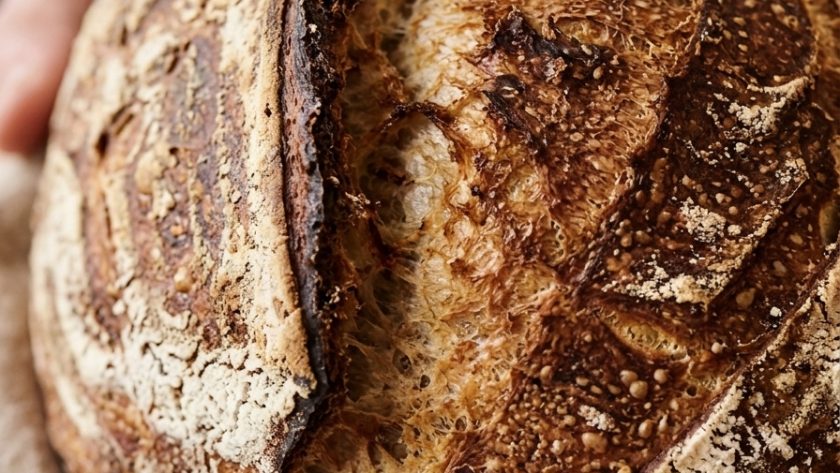
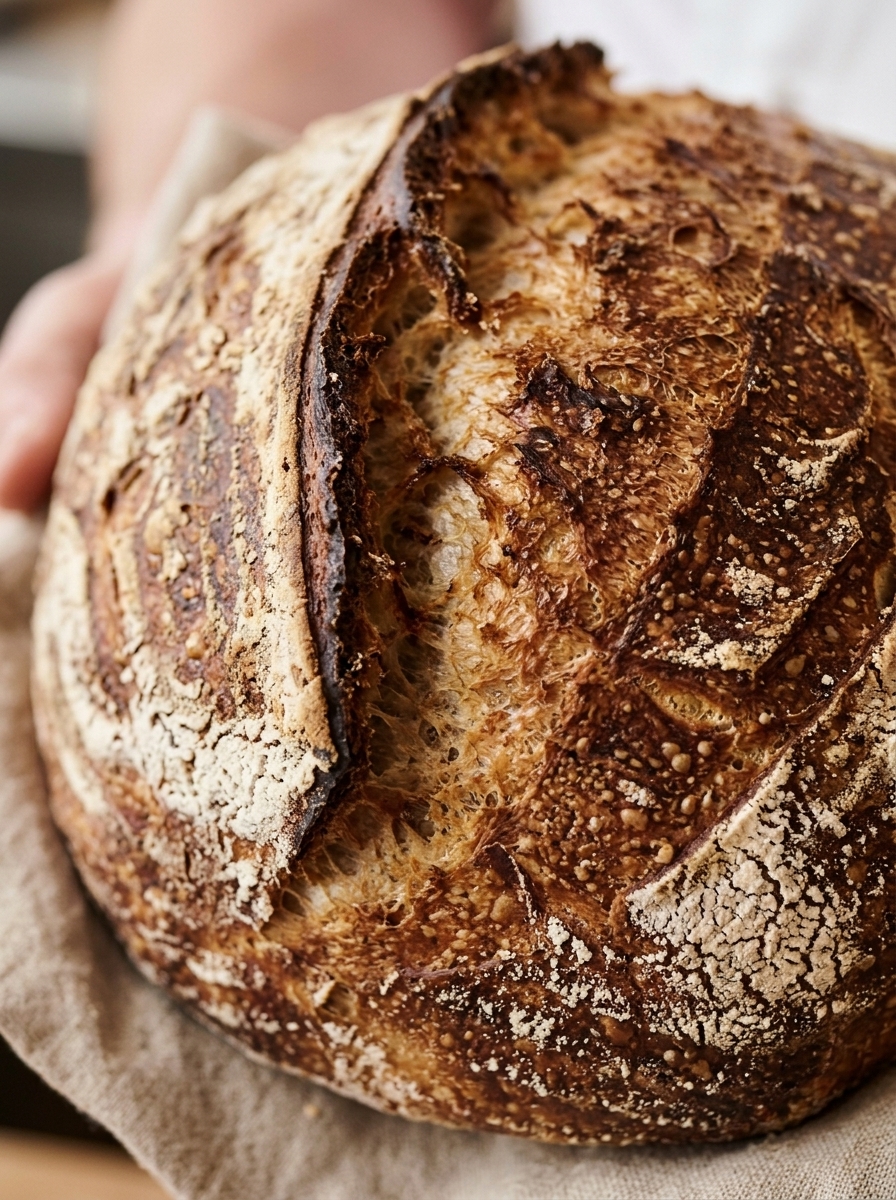
Baking in a preheated Dutch oven traps the steam released by the dough, keeping the crust soft and stretchy for the first part of the bake so the loaf can rise fully, before the lid comes off to let the crust blister, crisp and turn deep golden brown.
Ingredients for Gordon Ramsay Sourdough Bread
- 500g strong white bread flour, plus extra for dusting
- 350g lukewarm water
- 100g active sourdough starter (fed 4–8 hours earlier, bubbly and doubled)
- 10g fine sea salt
- Rice flour, for dusting the banneton
How to Make Gordon Ramsay Sourdough Bread — Step by Step
Step 1 — Autolyse
In a large bowl, mix the flour and water until no dry flour remains. Cover and leave for 1 hour, which lets the flour hydrate and begins gluten development.
Step 2 — Add the Starter and Salt
Add the starter and salt to the dough. Squeeze and fold with wet hands for 2–3 minutes, until fully combined.
Step 3 — Stretch and Fold
Cover the bowl. Every 30 minutes, for the next 2 hours, perform a set of stretch and folds: wet your hand, grab one edge of the dough, stretch it up, and fold it over the centre, turning the bowl and repeating 4 times.
Step 4 — Bulk Fermentation
Leave the dough, covered, at room temperature for a further 2–4 hours, until it has increased by about 50%, looks puffy and jiggles when the bowl is shaken.
Step 5 — Shape
Turn the dough onto a lightly floured surface. Gently pre-shape into a round and rest for 20 minutes. Then shape into a tight ball or oval, building surface tension.
Step 6 — Final Proof
Place the shaped dough seam-side up in a banneton or bowl lined with a well-floured tea towel. Cover and refrigerate for 12–16 hours, or overnight.
Step 7 — Preheat
Preheat the oven to 250°C / 230°C fan / Gas 9 with a Dutch oven inside, lid on, for at least 45 minutes.
Step 8 — Score and Bake
Turn the cold dough out onto baking parchment. Score the top with a sharp blade or lame. Carefully lower into the hot Dutch oven using the parchment. Bake with the lid on for 25 minutes.
Step 9 — Finish
Remove the lid, reduce the oven to 220°C / 200°C fan / Gas 7, and bake for a further 15–20 minutes, until deep golden brown.
Step 10 — Cool
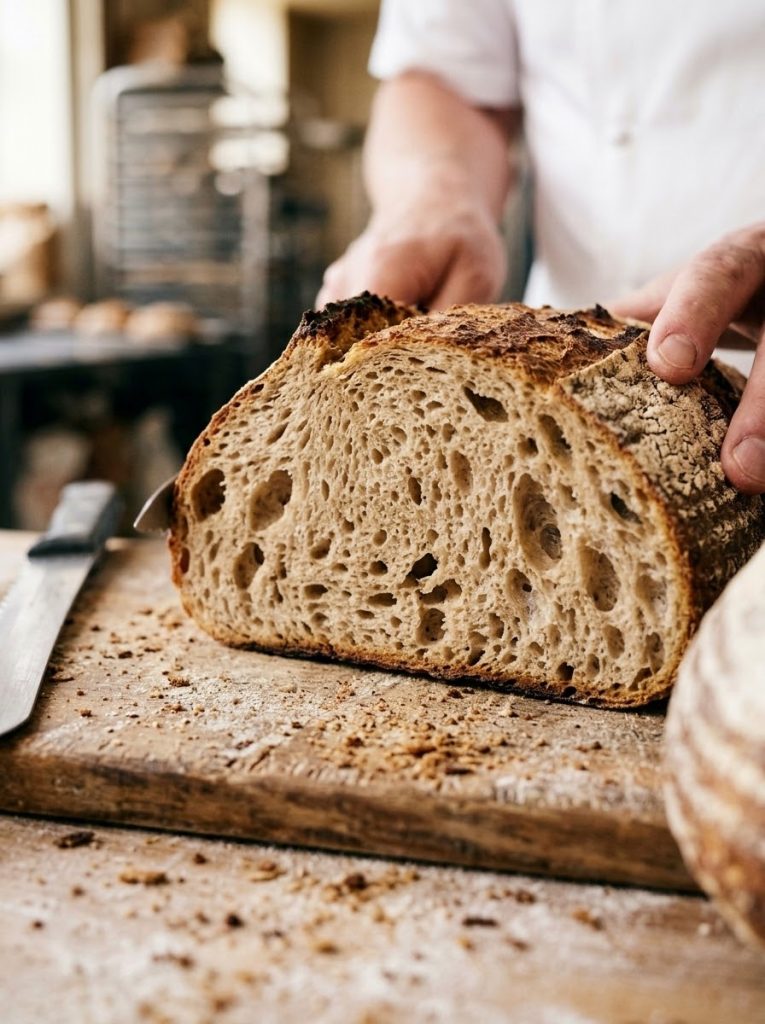
Transfer to a wire rack and cool for at least 1 hour before slicing, to let the crumb set.
My Top Tips for the Best Gordon Ramsay Sourdough Bread
Use a starter that’s at its peak, bubbly and doubled in size, as a sluggish starter gives a dense, flat loaf.
Handle the dough gently and with wet hands, since it’s sticky and wet, and overworking it knocks out the air.
Judge the bulk fermentation by the dough rather than the clock, looking for a puffy, jiggly dough that’s grown by roughly half.
Preheat the Dutch oven properly, as the intense heat and trapped steam are what give sourdough its oven spring and blistered crust.
Cool the loaf completely before slicing, as cutting into a hot loaf releases steam and leaves the crumb gummy.
Serving Suggestions
Serve thickly sliced with good salted butter, or toasted with avocado, eggs or soup. A slice of properly made sourdough is also the best base for bruschetta or a cheese toastie.
How to Store Gordon Ramsay Sourdough Bread
In the fridge: Not recommended, as refrigeration makes bread go stale faster. Store at room temperature, cut-side down on a board, or in a bread bin for up to 4 days.
In the freezer: Freezes very well for up to 3 months, sliced. Toast slices straight from frozen.
Gordon Ramsay Sourdough Bread Recipe
Ingredients
Method
- Mix flour and water, rest 1 hour.
- Add starter and salt, mix.
- Stretch and fold every 30 minutes for 2 hours.
- Bulk ferment 2–4 hours until puffy.
- Shape, place in a floured banneton.
- Chill 12–16 hours.
- Preheat the oven and Dutch oven to 250°C for 45 minutes.
- Score, bake covered 25 minutes.
- Uncover, reduce to 220°C, bake 15–20 minutes.
- Cool at least 1 hour.
Notes
Frequently Asked Questions About Gordon Ramsay Sourdough Bread
How do I make a sourdough starter?
Mix equal weights of flour and water in a jar and feed daily with fresh flour and water for 7–10 days, until bubbly and doubling reliably within 4–8 hours of feeding.
Why is my sourdough dense?
This usually means the starter wasn’t active enough, the dough was under-fermented, or it was overworked. Use a bubbly starter, and let the dough puff up properly.
Do I need a Dutch oven?
It gives the best results, but a heavy, lidded casserole works, or you can bake on a preheated tray with a tray of boiling water below for steam.
Why didn’t my loaf spring up in the oven?
Under-proofing, a weak starter, or insufficient steam can all cause this. Make sure the dough is properly fermented, and the Dutch oven is fully preheated.