 Alice Rose
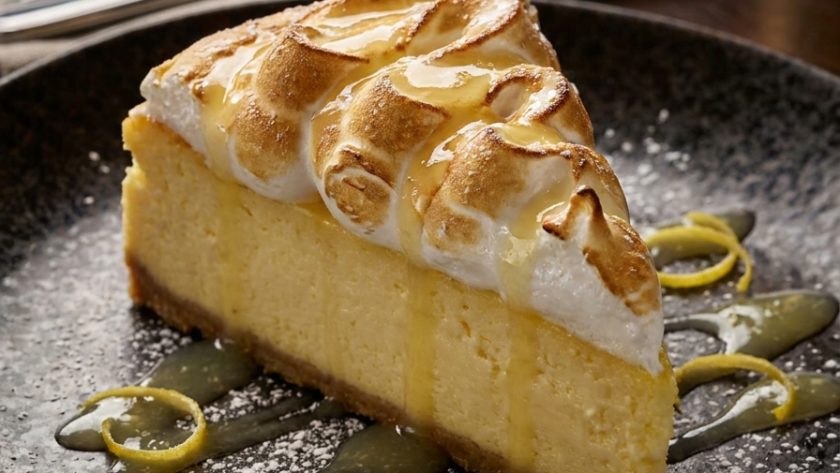
 Lemon meringue pie and baked cheesecake are two of the most loved British desserts, and this recipe combines them into one dish that borrows the best bits of each.
A crisp biscuit base, a creamy lemon-spiked cheesecake filling that bakes until just set, and a billowing meringue topping toasted until golden give you tang, richness and sweetness in a single slice.
It takes a little planning, since the cheesecake needs several hours to chill, but the actual hands-on time is quite manageable, and it’s a seriously impressive dessert to bring to the table.
Why Baking the Cheesecake Gently in a Water Bath Prevents Cracking
Cheesecake is essentially a delicate baked custard, and like any custard, it’s prone to cracking if it’s exposed to fierce, direct heat that causes the edges to set and shrink faster than the centre.
Baking it in a water bath, a roasting tin of hot water that the cheesecake tin sits inside, surrounds the cake with gentle, humid heat, which cooks it slowly and evenly and greatly reduces the chance of those unsightly cracks across the surface.
The meringue topping needs separate care too. Adding the sugar to the whisked egg whites gradually, a spoonful at a time, and whisking until the meringue is thick and glossy, creates a stable structure that holds its shape when piped and browns evenly when baked or torched, without weeping or collapsing once it sits on the chilled cheesecake.
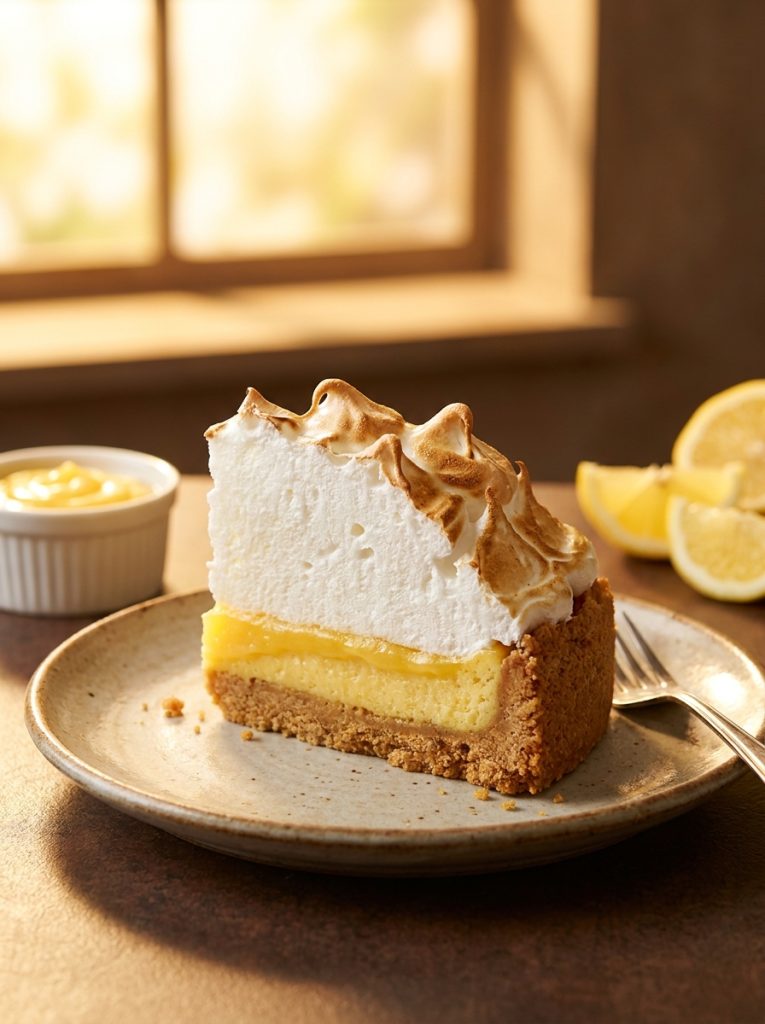
Ingredients for Gordon Ramsay Lemon Meringue Cheesecake
For the Base
- 250g digestive biscuits, crushed
- 100g unsalted butter, melted
For the Cheesecake Filling
- 600g full-fat cream cheese, at room temperature
- 150g caster sugar
- 3 large eggs, at room temperature
- 150ml soured cream
- Zest of 3 lemons
- Juice of 2 lemons
- 2 tbsp plain flour
For the Meringue
- 3 large egg whites
- 150g caster sugar
- 1/4 tsp cream of tartar
How to Make Gordon Ramsay Lemon Meringue Cheesecake — Step by Step
Step 1 — Make the Base
Preheat the oven to 170°C / 150°C fan / Gas 3. Grease and line a 23cm springform tin. Mix the crushed biscuits with the melted butter and press firmly into the base. Chill for 15 minutes.
Step 2 — Mix the Filling
Beat the cream cheese and sugar together until smooth. Add the eggs one at a time, beating well after each. Beat in the soured cream, lemon zest, lemon juice and flour until just combined.
Step 3 — Pour and Bake in a Water Bath
Pour the filling over the base. Wrap the outside of the tin in foil and place in a deep roasting tin. Fill the roasting tin with hot water to halfway up the side of the cheesecake tin. Bake for 55–60 minutes, until just set with a slight wobble in the centre.
Step 4 — Cool Slowly
Turn off the oven and leave the cheesecake inside with the door ajar for 1 hour. Then chill in the fridge for at least 6 hours, or overnight.
Step 5 — Make the Meringue
In a clean, dry bowl, whisk the egg whites and cream of tartar to soft peaks. Gradually add the sugar, a spoonful at a time, whisking until stiff and glossy.
Step 6 — Top and Toast
Remove the chilled cheesecake from the tin. Pipe or spoon the meringue over the top. Toast with a kitchen blowtorch until golden, or place under a hot grill for 1–2 minutes, watching closely.
Step 7 — Serve
Serve immediately, or return to the fridge for up to 1 hour before serving.
My Top Tips for the Best Gordon Ramsay Lemon Meringue Cheesecake
Use a water bath for even, gentle baking, as this is the single best way to prevent the cheesecake cracking across the top.
Have the cream cheese and eggs at room temperature, as cold ingredients make for a lumpy filling that bakes unevenly.
Cool the cheesecake slowly in the turned-off oven, since a sudden temperature drop can cause cracking just as easily as fierce heat.
Whisk the meringue until stiff and glossy, adding the sugar gradually, as this creates a stable meringue that doesn’t weep or collapse.
Add the meringue shortly before serving, as it’s at its best freshly toasted rather than after a long wait in the fridge.
Serving Suggestions
Serve in generous slices with a little extra lemon zest scattered over the top, or alongside fresh raspberries for a hit of tartness. A glass of dessert wine or a cup of strong tea suits the sweetness well.
How to Store Gordon Ramsay Lemon Meringue Cheesecake
In the fridge: Store the un-meringued cheesecake covered in the fridge for up to 4 days. Once topped with meringue, it’s best eaten within a day, as the meringue softens over time.
In the freezer: The un-meringued cheesecake freezes well for up to 2 months. Defrost overnight in the fridge and add fresh meringue before serving.
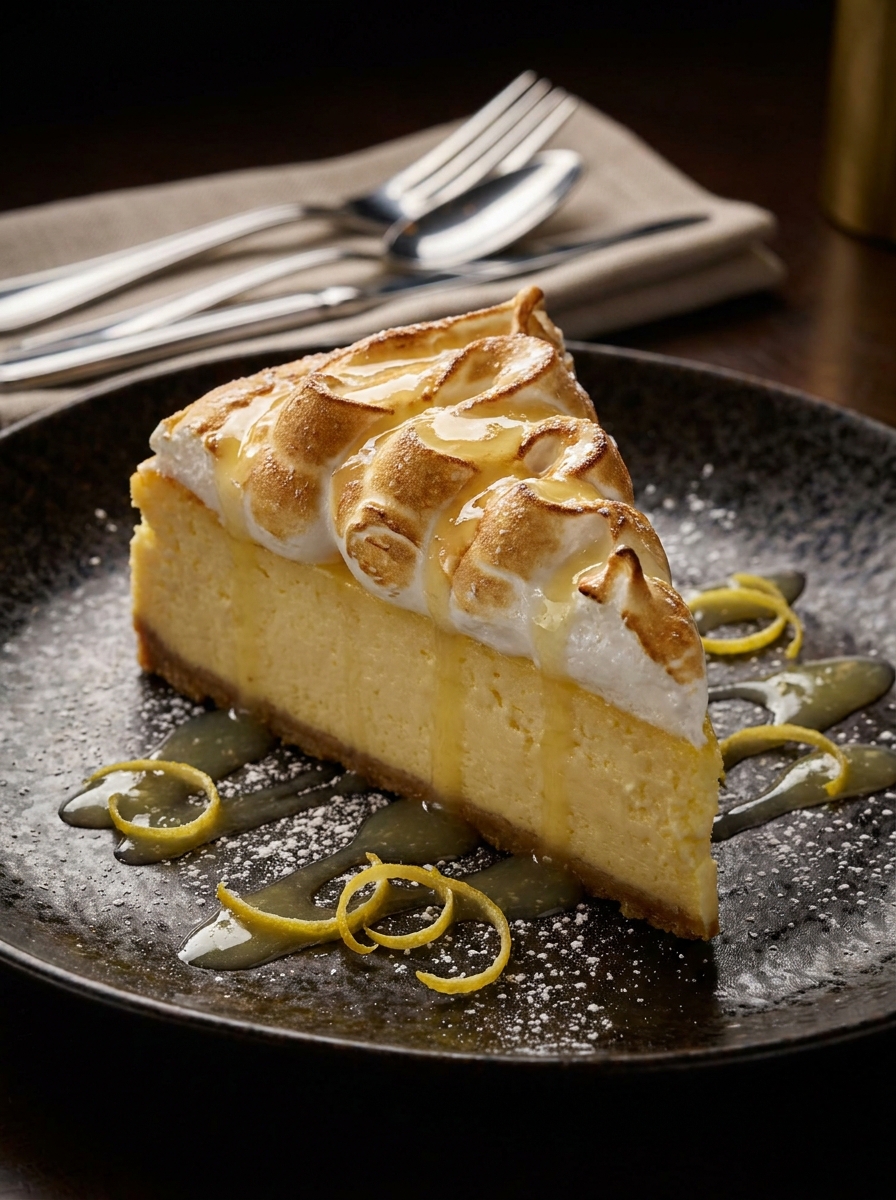
Gordon Ramsay Lemon Meringue Cheesecake Recipe
Ingredients
Method
- Preheat oven to 170°C / 150°C fan / Gas 3. Press biscuit and butter mix into a lined springform tin, chill 15 minutes.
- Beat cream cheese and sugar, add eggs one at a time, then soured cream, lemon zest, juice and flour.
- Pour over base, bake in a water bath 55–60 minutes.
- Cool in the turned-off oven 1 hour, then chill at least 6 hours.
- Whisk egg whites and cream of tartar to soft peaks, add sugar gradually to stiff and glossy.
- Top chilled cheesecake with meringue, toast with a blowtorch or under a hot grill.
- Serve immediately.
Notes
Frequently Asked Questions About Gordon Ramsay Lemon Meringue Cheesecake
Why did my cheesecake crack?
This is usually from baking at too high a temperature, skipping the water bath, or cooling the cheesecake too quickly. A gentle bake and slow cooling both help prevent it.
Can I make the cheesecake ahead of time?
Yes — the cheesecake itself is best made the day before, as it needs several hours to chill and set. Add the meringue shortly before serving.
Why is my meringue weeping?
This usually means the sugar wasn’t fully dissolved, or the meringue sat for too long on the cheesecake. Whisk until the meringue is thick and glossy, and top the cheesecake close to serving.
Can I use a different biscuit for the base?
Yes — ginger nuts or shortbread both work well, giving a slightly different flavour that pairs nicely with the lemon.