 Alice Rose
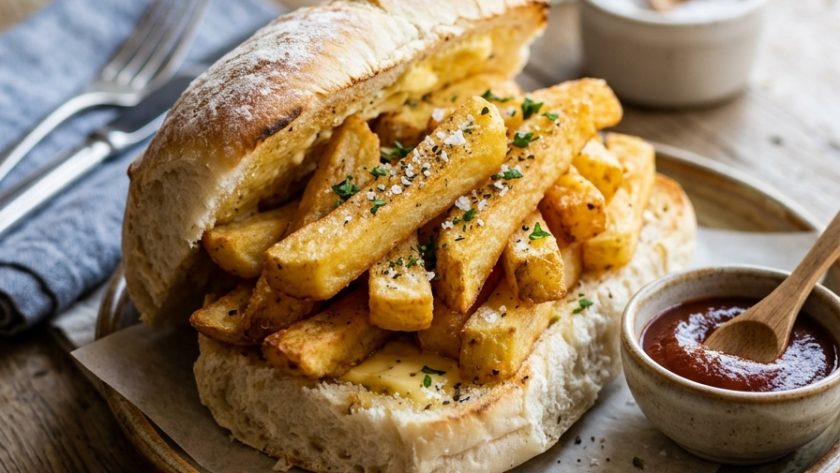
 A chip butty is as simple as food gets, which means the details are all there is. The chips need to be properly crisp on the outside and fluffy inside, or they turn soggy the moment they hit the bread.
The bread needs to be soft and well buttered, since it’s meant to compress around the chips rather than fight them.
Double-frying the chips is the only technical step here, and it’s what separates a good chip butty from a disappointing one.
Why Double-Frying the Chips Is the Only Step That Really Matters
A single fry cooks chips through but doesn’t give them a crust strong enough to survive being pressed between two slices of bread.
The first fry, at a lower temperature, cooks the potato through until soft, while the second fry, at a much higher temperature, crisps the outside quickly into a proper shell.
That outer shell is what keeps the chips from going soft inside the sandwich. A chip that’s only been fried once starts to steam and soften almost immediately once it’s enclosed in bread, which is why a chip butty made with oven chips or a single fry never quite works the same way.
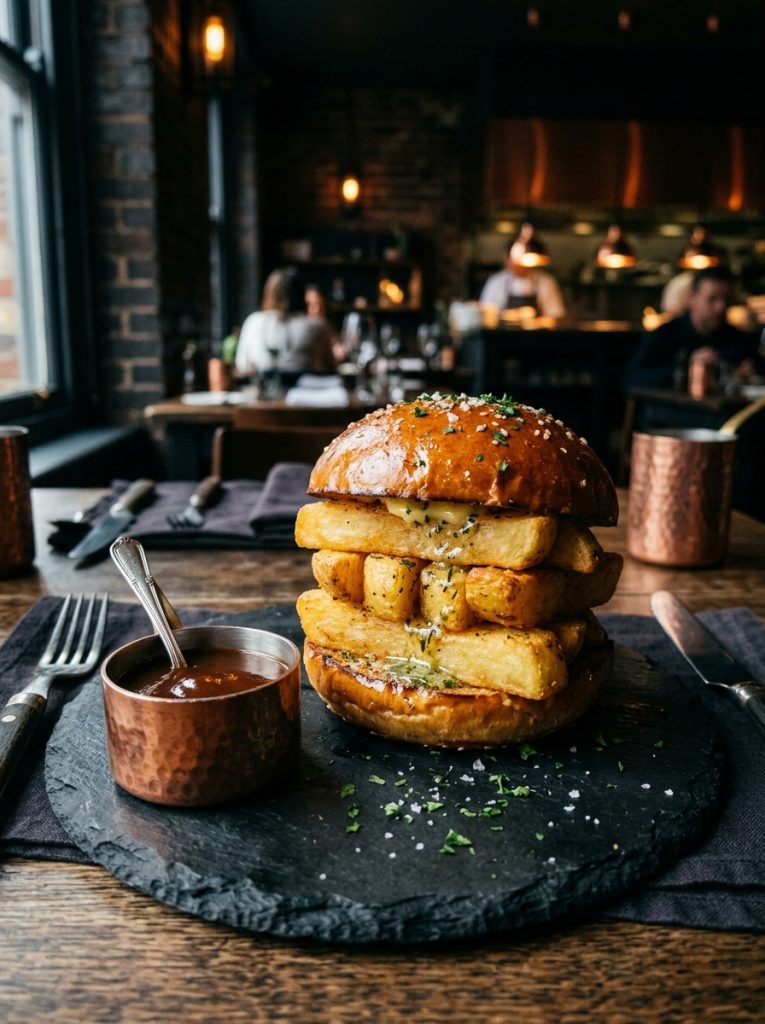
Ingredients for Gordon Ramsay Chip Butty
- 800g Maris Piper or King Edward potatoes, peeled
- Vegetable oil, for deep frying
- Salt
- 8 slices soft white bread
- 80g salted butter, softened
- Tomato ketchup or brown sauce, to serve
How to Make Gordon Ramsay Chip Butty — Step by Step
Step 1 — Cut the Chips
Cut the potatoes into thick chips, roughly 1.5cm square. Rinse under cold water to remove excess starch, then dry thoroughly with a clean tea towel.
Step 2 — First Fry
Heat the oil to 140°C. Fry the chips in batches for 6–8 minutes, until soft but with no colour. Remove and drain on kitchen paper. Leave to cool for at least 10 minutes.
Step 3 — Second Fry
Increase the oil temperature to 190°C. Fry the chips again in batches for 3–4 minutes, until deep golden and crisp.
Step 4 — Drain and Season
Drain on kitchen paper and season generously with salt while still hot.
Step 5 — Butter the Bread
Butter the bread generously, right to the edges, using softened butter so it spreads without tearing the slices.
Step 6 — Assemble
Pile the hot chips onto four slices of bread. Add ketchup or brown sauce, top with the remaining slices, and press down gently. Serve immediately.
My Top Tips for the Best Gordon Ramsay Chip Butty
Dry the chips thoroughly after rinsing, as any water left on them will cause the oil to spit and stop the chips crisping properly.
Let the chips cool between the two fries, since this brief rest helps the outside dry out and crisp better during the second fry.
Use soft white bread rather than a crusty loaf, as the whole point of a chip butty is bread that compresses around the chips.
Butter the bread right to the edges, which creates a slight barrier against the steam coming off the hot chips.
Assemble and eat immediately, as a chip butty left to sit will turn soft within a couple of minutes.
Serving Suggestions
Serve immediately with ketchup or brown sauce, depending on preference. A mug of tea alongside is the traditional accompaniment, and it’s hard to argue with.
How to Store Gordon Ramsay Chip Butty
In the fridge: Not suitable for storing assembled. Leftover chips can be kept covered in the fridge for up to 2 days and reheated in a hot oven to crisp back up.
In the freezer: Blanched chips from the first fry can be frozen for up to 3 months, then fried directly from frozen for the second fry. The assembled butty doesn’t freeze.
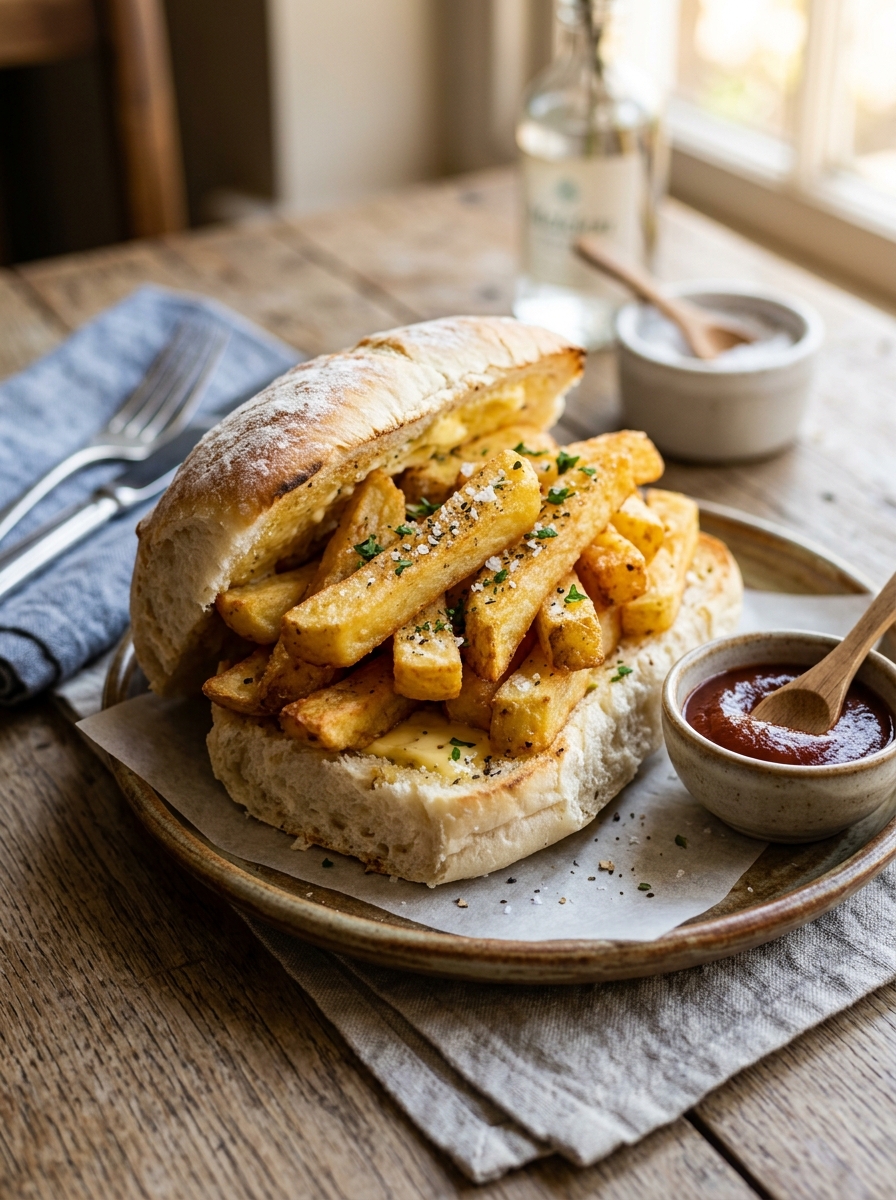
Gordon Ramsay Chip Butty Recipe
Ingredients
Method
- Cut potatoes into thick chips, rinse and dry thoroughly.
- Fry at 140°C for 6–8 minutes until soft with no colour. Drain and cool 10 minutes.
- Fry again at 190°C for 3–4 minutes until golden and crisp.
- Drain and salt generously.
- Butter bread generously to the edges.
- Pile chips onto bread, add sauce, top and press gently. Serve immediately.
Notes
Frequently Asked Questions About Gordon Ramsay Chip Butty
Can I use oven chips instead of frying?
You can, though they won’t have the same crisp shell and will soften inside the bread much faster than double-fried chips.
What’s the best potato for chips?
Floury varieties such as Maris Piper or King Edward work best, as they give a fluffy interior and crisp exterior. Waxy potatoes hold too much moisture and don’t crisp as well.
Can I do the first fry in advance?
Yes — the first fry can be done several hours ahead, or the blanched chips can be frozen. Do the second fry just before serving.
Why are my chips soggy?
This is usually from not drying the potatoes properly before frying, from overcrowding the pan, or from skipping the second, high-temperature fry.