
 Alice Rose
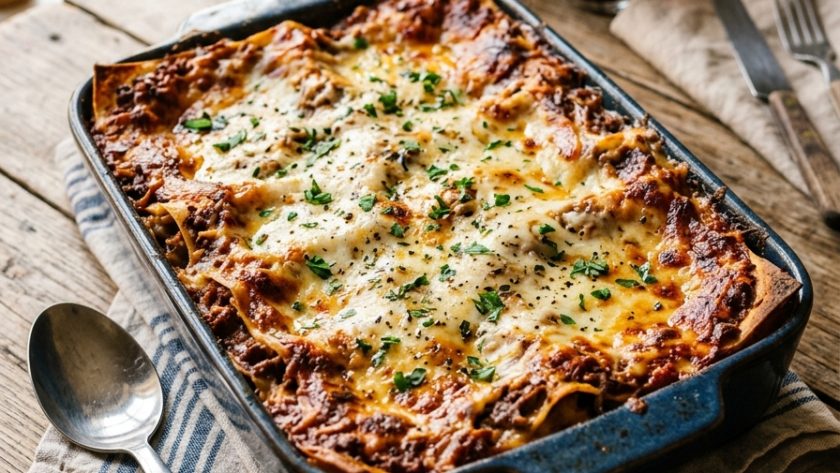
 There’s a version of lasagne most of us grew up with — a bit sloppy, more tinned tomato than substance, and it never quite held its shape when you cut into it. This Gordon Ramsay beef lasagne recipe is not that lasagne.
I started making this after one too many disappointing attempts using a jar of ready-made sauce, wondering why it never tasted like the lasagne I’d had in restaurants. The answer, it turns out, is time.
This recipe leans hard on a properly slow-cooked ragu — built on a soffritto of onion, carrot and celery, deepened with pancetta and a good glug of red wine — and a béchamel that’s seasoned with nutmeg rather than left to taste of nothing but flour and milk.
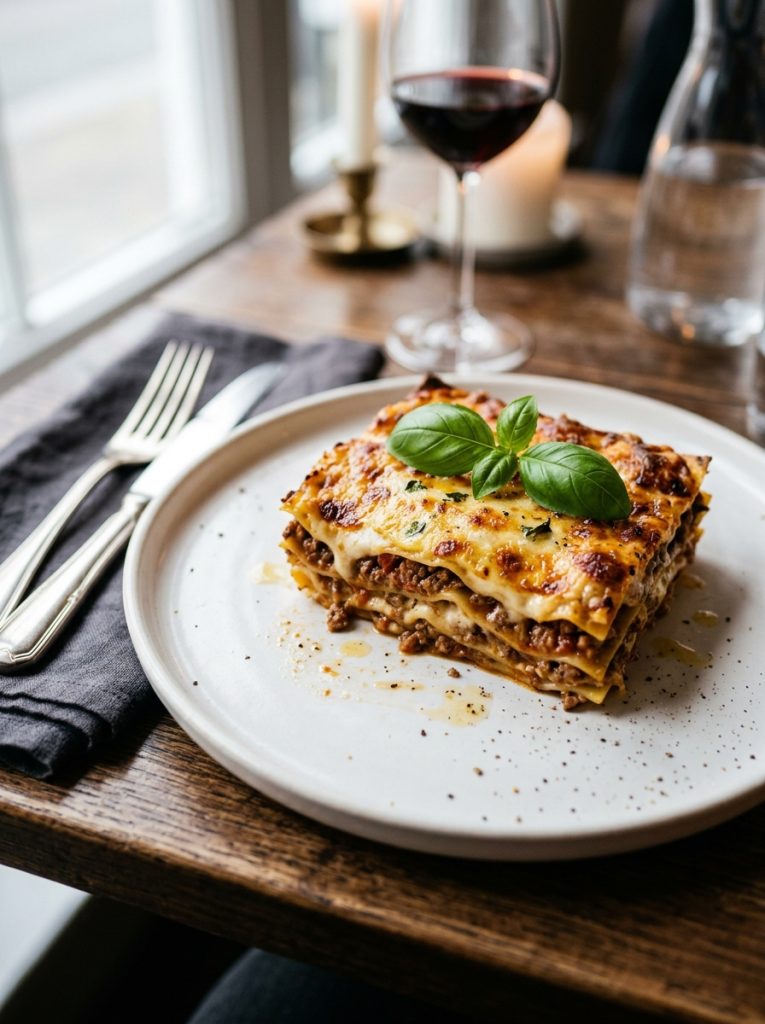
It takes the better part of an afternoon, but very little of that is active work, and the result is a lasagne that cuts into clean, structured slices rather than collapsing the moment your fork touches it.
If you’ve been searching for a Gordon Ramsay lasagne recipe that actually tastes like it’s been simmering all day — this is the one.
Why This Gordon Ramsay Beef Lasagne Recipe Works
The difference between an average lasagne and a genuinely good one almost never comes down to a long ingredient list. It comes down to technique, and specifically, to two things most people rush: browning the meat and reducing the sauce properly.
I brown the beef mince in batches rather than tipping it all into the pan at once. It feels like an unnecessary extra step until you understand what’s actually happening — a crowded pan drops in temperature immediately, and instead of browning, the meat simply steams in its own liquid.
You lose all of that deep, caramelised flavour that makes a ragu taste rich rather than one-dimensional. Batching the mince keeps the pan properly hot the entire time.
The béchamel is the other place this recipe pulls ahead of a standard version. Most home-cooked white sauces are either too thick and gluey or so thin they soak straight through the pasta sheets.
Cooking the roux out properly for a full minute before the milk goes in removes any raw flour taste, and a good grating of fresh nutmeg is the one ingredient that lifts a béchamel from “fine” to genuinely good — it’s subtle, but you’d notice immediately if it were missing.
Ingredients for Gordon Ramsay Beef Lasagne
For the Beef Ragu
- 2 tbsp olive oil
- 1 large onion, finely diced
- 2 carrots, finely diced
- 2 celery sticks, finely diced
- 3 garlic cloves, finely chopped
- 800g beef mince (15% fat — too lean and the ragu turns dry)
- 150g pancetta, diced
- 150ml red wine
- 2 x 400g tins chopped tomatoes
- 2 tbsp tomato purée
- 1 beef stock cube, crumbled
- 2 bay leaves
- 1 tsp dried oregano
- Salt and freshly ground black pepper
For the Nutmeg Béchamel
- 70g unsalted butter
- 70g plain flour
- 800ml whole milk, warmed
- 1/4 tsp freshly grated nutmeg
- 80g Parmesan, finely grated
To Assemble
- 250g fresh lasagne sheets (dried works too — see notes)
- 100g mozzarella, torn
- 30g Parmesan, finely grated
How to Make Gordon Ramsay Beef Lasagne — Step by Step
Step 1 — Build the Soffritto
Heat the olive oil in a large, heavy-bottomed pan over medium heat. Add the onion, carrot and celery, and cook gently for 10 to 12 minutes, stirring occasionally, until soft and just starting to turn golden at the edges. Add the garlic and cook for a further minute. This slow start is what gives the finished ragu its sweetness, so don’t rush it.
Step 2 — Brown the Meat in Batches
Push the vegetables to one side of the pan and turn the heat up to high. Add the pancetta and cook for 2 to 3 minutes until it starts to crisp. Add the beef mince in two or three batches, browning each batch thoroughly before adding the next. This is the step that makes the biggest difference to the final flavour of your Gordon Ramsay beef lasagne, so resist the urge to skip it.
Step 3 — Deglaze with Red Wine
Once all the meat is browned, return everything to the pan together, pour in the red wine, and let it bubble and reduce by roughly half — about 3 to 4 minutes. Scrape up any browned bits from the base of the pan as it reduces; that’s where a lot of the flavour is hiding.
Step 4 — Simmer the Ragu
Stir in the chopped tomatoes, tomato purée, crumbled stock cube, bay leaves and oregano. Season with salt and pepper. Bring to a gentle simmer, then reduce the heat to low, partially cover, and cook for 1.5 to 2 hours, stirring occasionally, until thick and rich rather than loose and saucy. Remove the bay leaves before assembling.
Step 5 — Make the Béchamel
Melt the butter in a separate saucepan over medium heat. Whisk in the flour and cook for about a minute, stirring constantly, to cook out the raw flour taste. Gradually pour in the warmed milk, whisking continuously to keep it smooth and lump-free. Keep whisking for 5 to 6 minutes until the sauce thickens enough to coat the back of a spoon. Stir in the nutmeg and Parmesan, season to taste, then take it off the heat.
Step 6 — Preheat and Layer
Preheat your oven to 190°C / 170°C fan / Gas 5. Spread a thin layer of ragu over the base of a large baking dish, roughly 30x20cm. Add a layer of pasta sheets, then ragu, then béchamel. Repeat this layering three more times, finishing with a generous final layer of béchamel across the top.
Step 7 — Top and Bake
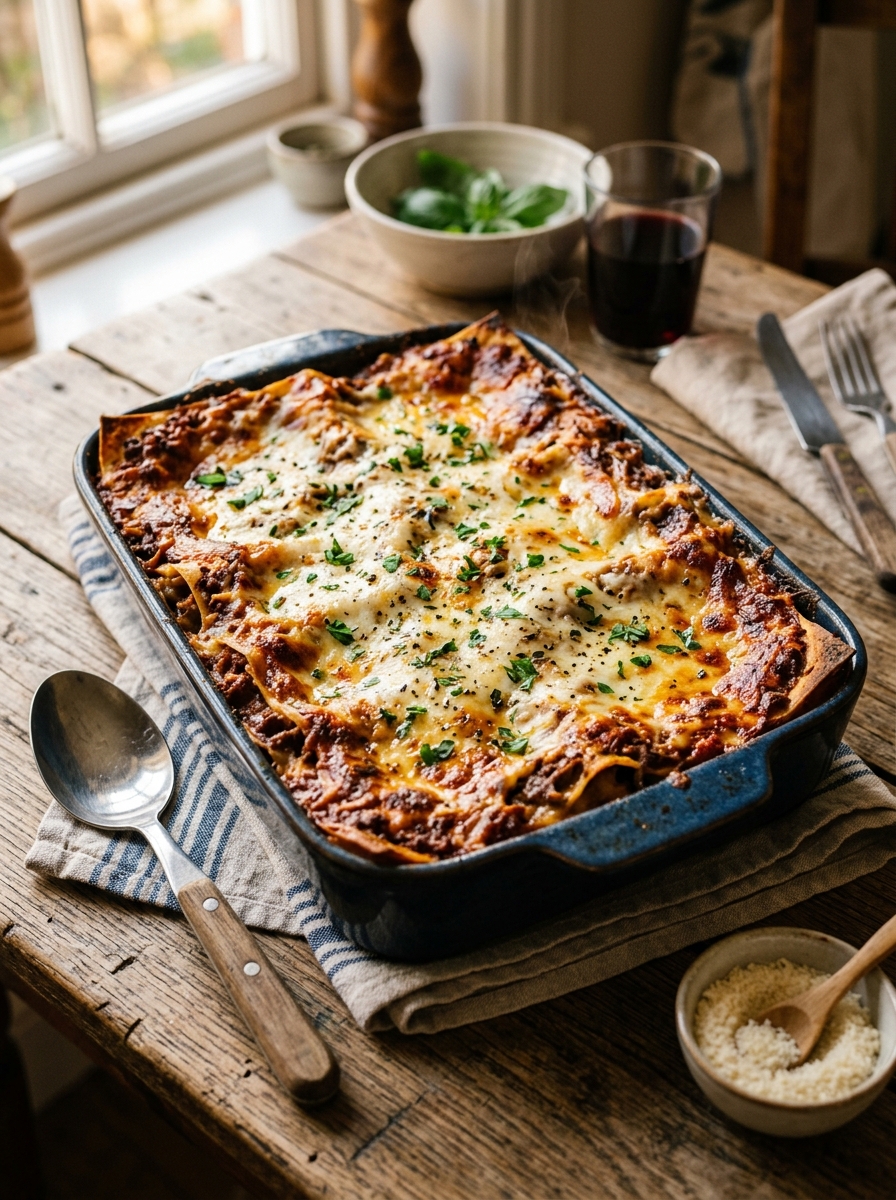
Scatter the torn mozzarella and remaining Parmesan evenly over the top. Bake for 35 to 40 minutes until deeply golden and bubbling at the edges, and a knife inserted into the centre meets no resistance.
Step 8 — Rest Before Cutting
Let the lasagne stand for at least 10 to 15 minutes before serving. I know this is the hardest part, but it’s what gives you neat, structured slices instead of a sauce that runs straight across the plate.
My Top Tips For the Best Gordon Ramsay Beef Lasagne
Brown the beef in batches, every time. I mention this twice because it genuinely is the single biggest factor separating a flat-tasting lasagne from a rich one. A crowded pan steams the mince instead of browning it, and you simply cannot get that flavour back later in the process.
Don’t skip the red wine. It adds a depth to the ragu that’s hard to replicate any other way. If you’d rather not cook with alcohol, swap it for the same quantity of beef stock with a small splash of balsamic vinegar to bring back some of that acidity.
Reduce the ragu properly before assembling. It should look thick, almost paste-like, when it’s ready — not soupy. A watery ragu is the most common reason a finished lasagne turns out loose and difficult to slice.
Use fresh nutmeg if you can. Pre-ground nutmeg loses its aroma quickly once opened, and freshly grated makes a noticeably bigger difference in the béchamel than you’d expect from such a small quantity.
Give it a proper rest. Ten to fifteen minutes out of the oven before cutting is non-negotiable if you want clean slices rather than a collapsed one.
Serving Suggestions
I keep the sides simple with this one — a sharply dressed rocket and Parmesan salad, with plenty of lemon in the dressing, cuts straight through the richness of the ragu and béchamel. Garlic bread is never a bad shout if you want to lean fully into comfort-food territory, and a glass of the same red wine you cooked with ties the whole plate together nicely.
How to Store Gordon Ramsay Beef Lasagne
In the fridge: Cool completely, then store covered in the fridge for up to 3 days. Reheat individual portions in the microwave, or cover the dish with foil and reheat in a 160°C oven for 20 to 25 minutes until piping hot throughout.
In the freezer: This lasagne freezes extremely well. Once fully cooled, wrap individual portions or the whole dish tightly in cling film and foil, and freeze for up to 3 months. Defrost completely in the fridge overnight before reheating.
Gordon Ramsay Beef Lasagne Recipe
Ingredients
Method
- Cook onion, carrot and celery in olive oil for 10–12 minutes until soft. Add garlic, cook 1 minute.
- Brown pancetta, then brown beef mince in batches.
- Return everything to the pan, add red wine, reduce by half.
- Add tomatoes, purée, stock cube, bay leaves, oregano. Simmer 1.5–2 hours until thick.
- Make béchamel: melt butter, whisk in flour, cook 1 minute, gradually whisk in warm milk until thickened. Stir in nutmeg and Parmesan.
- Preheat oven to 190°C / 170°C fan / Gas 5.
- Layer ragu, pasta, ragu, béchamel — repeat 4 times, finishing with béchamel.
- Top with mozzarella and Parmesan. Bake 35–40 minutes until golden and bubbling.
- Rest 10–15 minutes before slicing.
Notes
Frequently Asked Questions About Gordon Ramsay Beef Lasagne
Can I make this Gordon Ramsay beef lasagne ahead of time?
Yes, and I’d actually recommend it — the flavours settle and deepen overnight. Assemble the whole dish, cover, and refrigerate for up to 24 hours before baking. If it goes into the oven cold from the fridge, add an extra 10 minutes to the baking time.
Do I have to use fresh lasagne sheets?
Not at all. Dried lasagne sheets work perfectly well here — just make sure your ragu and béchamel are both a touch looser than you think they need to be, since dried sheets absorb more moisture as they bake.
Why has my lasagne come out watery?
This almost always comes down to the ragu not being reduced enough before assembly. It needs to be thick before it goes anywhere near the pasta sheets — give it more time on the heat if it still looks loose.
Can I use a different mince?
You can. A 50/50 mix of beef and pork mince gives an even richer result, and it’s actually how I make this most weeks at home.