
 Alice Rose
A real Greek salad is a very different thing from the lettuce-based version found in many British restaurants and supermarkets.
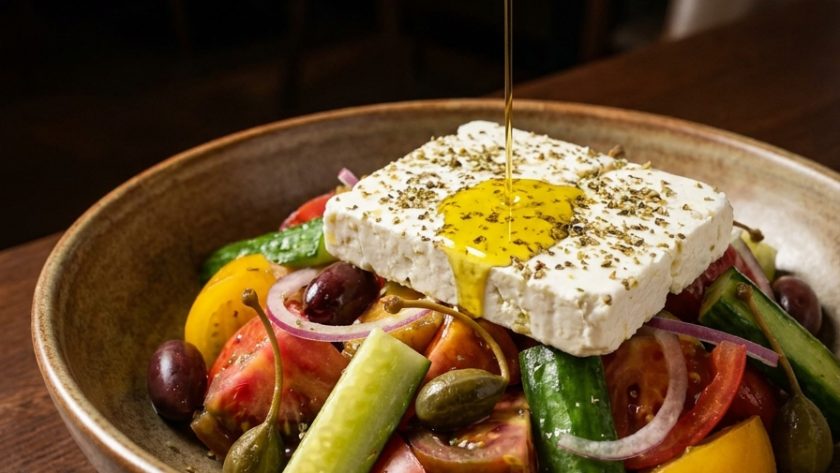
There’s no lettuce at all: just ripe tomatoes, cucumber, red onion and olives, topped with a thick slab of feta and dressed with good olive oil and dried oregano.
It’s one of the simplest salads you can make, and its quality rests almost entirely on the quality of each ingredient, so it’s worth buying the best tomatoes and feta you can find.
Why a Whole Slab of Feta and No Lettuce Makes This a Proper Greek Salad
The traditional Greek salad, known as horiatiki, was always built around chunky vegetables rather than leaves. Lettuce is a recent addition outside Greece, and it dilutes the flavour of the tomatoes and dressing rather than adding anything.
Leaving it out lets the ripe tomatoes and the juices they release become the base of the salad, which the olive oil and oregano then dress.
Serving the feta as a whole slab on top, rather than crumbling it through the salad, is the other traditional detail.
It keeps the cheese’s creamy texture intact, lets each person break off pieces as they eat, and stops the feta from dissolving into the dressing and making the salad cloudy and salty throughout.
Ingredients for Gordon Ramsay Greek Salad
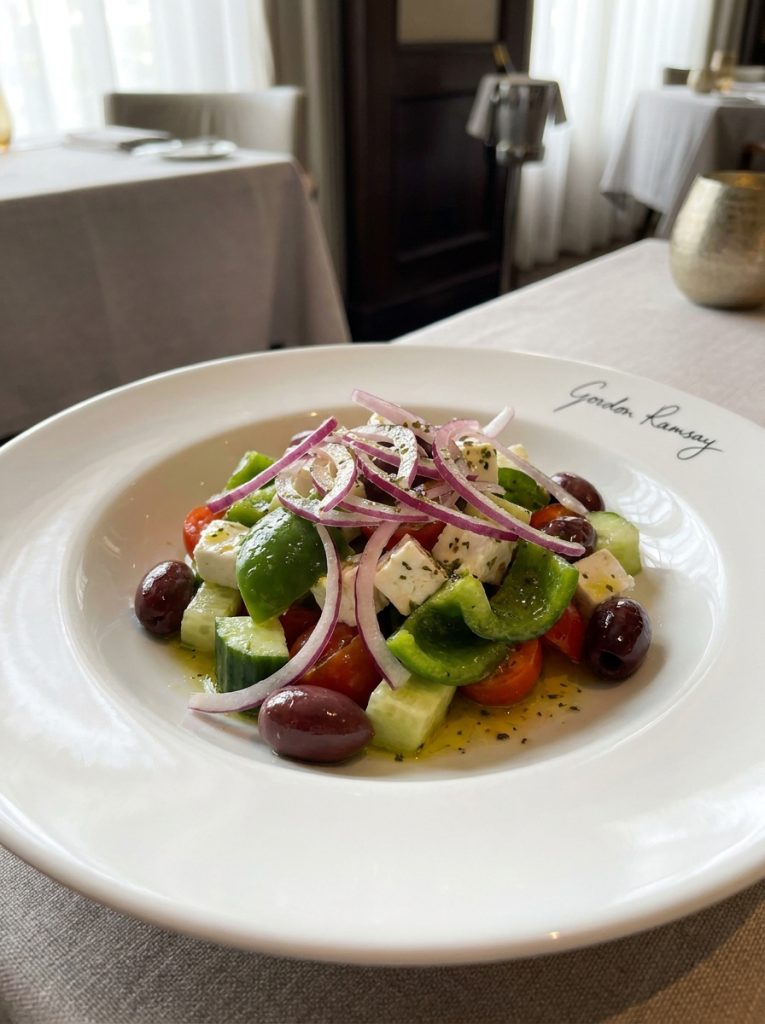
- 6 ripe tomatoes, cut into wedges
- 1 cucumber, peeled in stripes and cut into thick chunks
- 1/2 red onion, thinly sliced
- 1 green pepper, deseeded and sliced into rings
- 100g Kalamata olives
- 200g block of feta
- 4 tbsp extra virgin olive oil
- 1 tbsp red wine vinegar
- 1 tsp dried oregano
- Salt and freshly ground black pepper
How to Make Gordon Ramsay Greek Salad — Step by Step
Step 1 — Prepare the Vegetables
Cut the tomatoes into wedges and the cucumber into thick chunks. Slice the red onion and green pepper.
Step 2 — Combine
Add the tomatoes, cucumber, onion, pepper and olives to a large, shallow bowl.
Step 3 — Season
Season the vegetables lightly with salt and toss gently.
Step 4 — Make the Dressing
Whisk together the olive oil and red wine vinegar. Season with pepper.
Step 5 — Dress
Drizzle the dressing over the vegetables and toss gently to coat.
Step 6 — Add the Feta
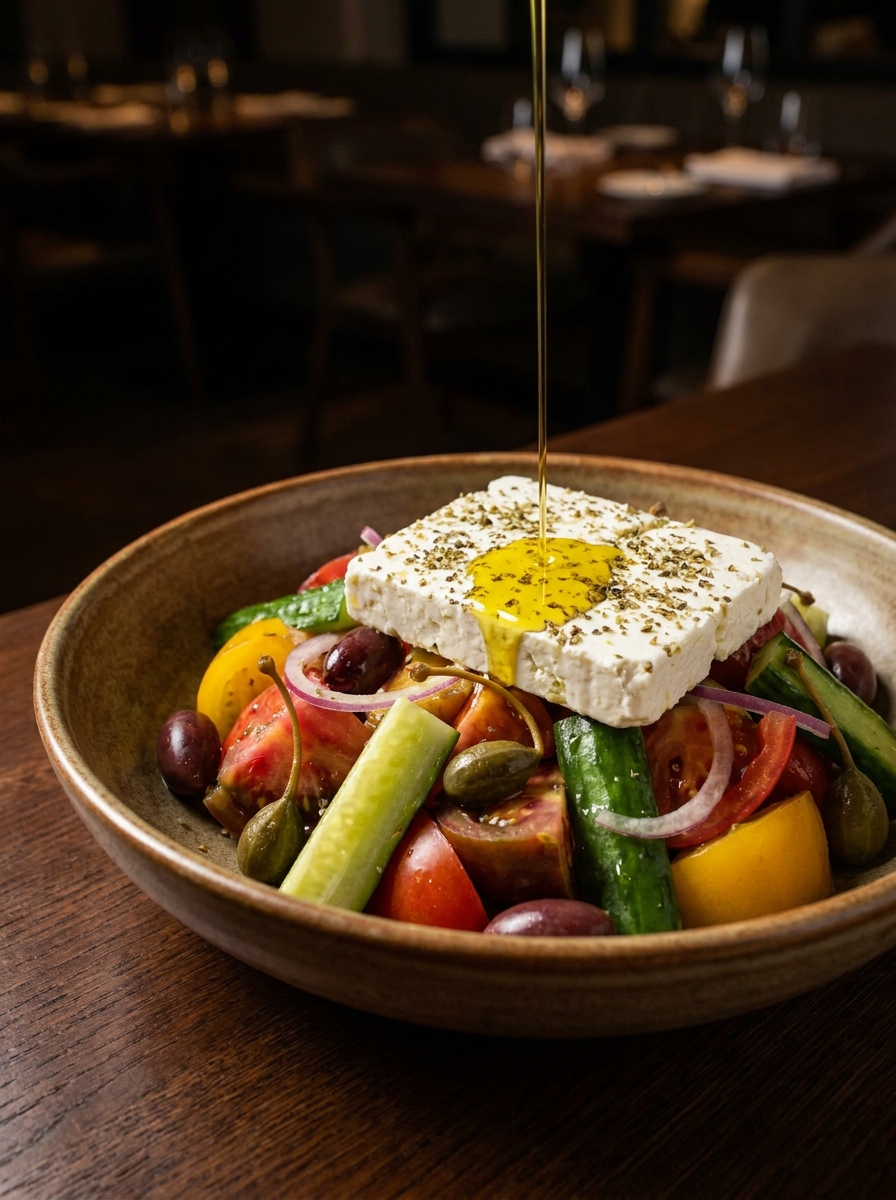
Place the block of feta on top of the salad. Drizzle with a little more olive oil and sprinkle generously with dried oregano.
Step 7 — Serve
Serve immediately, letting everyone break off pieces of feta as they help themselves.
My Top Tips for the Best Gordon Ramsay Greek Salad
Use the ripest, most flavourful tomatoes you can find, ideally at room temperature, as they carry the whole salad.
Leave out the lettuce, which isn’t part of a traditional Greek salad and dilutes the flavour of the tomatoes and dressing.
Serve the feta as a whole slab rather than crumbling it, as this keeps its creamy texture and stops the salad becoming overly salty.
Use good-quality extra virgin olive oil, as it makes up a large part of the dressing and its flavour comes through clearly.
Dress just before serving, as the tomatoes release liquid and the salad can turn watery if it sits for too long.
Serving Suggestions
Serve with warm pitta or crusty bread to mop up the tomato and olive oil juices at the bottom of the bowl. It works well as a side for grilled lamb, chicken or fish.
How to Store Gordon Ramsay Greek Salad
In the fridge: Best eaten fresh. Store any undressed vegetables separately, covered, in the fridge for up to 1 day.
In the freezer: Not suitable for freezing, as the tomatoes, cucumber and feta all lose their texture completely once frozen and thawed.
Gordon Ramsay Greek Salad Recipe
Ingredients
Method
- Cut vegetables into wedges and chunks.
- Combine in a large bowl with olives.
- Season lightly with salt.
- Whisk olive oil and vinegar, season.
- Dress the vegetables.
- Place feta block on top, drizzle with oil, sprinkle with oregano.
- Serve immediately.
Notes
Frequently Asked Questions About Gordon Ramsay Greek Salad
Does a real Greek salad contain lettuce?
No — a traditional Greek salad contains no lettuce, just tomatoes, cucumber, onion, olives and feta.
What’s the best feta to use?
Look for feta made from sheep’s milk, or a sheep and goat’s milk blend, ideally sold in brine, as it’s creamier and has more flavour than cheaper cow’s milk versions.
Why has my Greek salad gone watery?
This is usually from dressing it too far ahead, as the tomatoes and cucumber release liquid. Dress it just before serving.
Can I add other ingredients?
Capers or a few caper leaves are traditional additions in some regions, though the classic combination stands well on its own.